The metalworking and metal finishing industry is, in many ways, the defining market for industrial spray nozzle technology. Every metal part that receives a protective or decorative coating — every painted appliance, every chrome-plated component, every phosphated automotive body panel, every electroplated connector pin — has passed through a sequence of spray stages that determines whether the final coating adheres, lasts, and performs. The cleanliness of the metal surface before coating is everything: a single zone of inadequate rinsing, a clogged nozzle in the phosphating stage, or a blocked eductor in the plating tank can cause an entire batch to fail adhesion testing or corrosion resistance requirements. In this article, we examine the six key spray nozzle applications in metalworking and metal finishing operations and identify the BEX Engineering products best suited to each.
A paint spray booth is one of the most controlled environments in a metalworking facility. Temperature, humidity, air velocity, and air cleanliness must all be maintained within tight tolerances to achieve a consistently high-quality finish. Two spray nozzle applications are central to paint booth operation: humidity control (maintaining the correct atmospheric conditions for the paint being applied) and water wash overspray capture (removing paint particles from the exhaust air before it is discharged to atmosphere).
The shift from solvent-based to water-based paints in automotive and industrial manufacturing has been driven by environmental regulations restricting the emission of volatile organic compounds. However, water-based paints have a critical dependency on atmospheric humidity: they require a strict temperature range of approximately 70 ± 2°F (21 ± 1°C) and a relative humidity range of 50 ± 10% to achieve proper atomization, flow, and film build. If the booth is too dry, the water carrier in the paint evaporates too rapidly, causing the paint to skin over before it has levelled, resulting in orange peel, poor flow, and adhesion failure. If it is too humid, the paint does not flash off properly between coats and the film remains tacky. These requirements place humidity control nozzles in the critical path of paint quality.
Why it matters: water-based paint only flows and levels properly inside a narrow humidity band — drift out of it and the finish shows orange peel or stays tacky, and every part painted in that window is rework.


The BEX JPL Series air atomizing nozzles produce the ultra-fine droplet distribution (10–50 μm) needed for accurate paint booth humidification. Their independent air and liquid controls allow precise adjustment of the humidification rate in response to real-time humidity sensor feedback, ensuring that the booth maintains the target RH regardless of seasonal variations in incoming supply air conditions. The fine droplets evaporate rapidly and completely, introducing water vapor into the booth air without wetting the workpiece, the conveyor, or the booth structure. For simpler installations where compressed air is not readily available at the booth, the C Series hydraulic atomizers at low operating pressures provide an economical hydraulic humidification option.
In water-wash paint booths, the exhaust air drawn through the booth floor carries entrained paint overspray particles that must be removed before the air is discharged to atmosphere. OSHA defines a water-wash spray booth as one equipped with a water washing system designed to minimize dust or residues entering exhaust ducts and to permit recovery of overspray finishing material. Spray nozzles in the exhaust ducts or below-floor scrubber section create a water curtain that the overspray-laden air must pass through, with the water droplets capturing and agglomerating the paint particles and carrying them to the sump for collection and disposal. The nozzle must produce a dense, uniform curtain of water across the full duct cross-section — any gaps allow paint-laden air to bypass the wash zone and pass directly to atmosphere.
Why it matters: any gap in the wash curtain lets paint-laden air bypass the scrubber and go straight up the stack, and in recirculated wash water a clogging nozzle opens exactly that kind of gap.
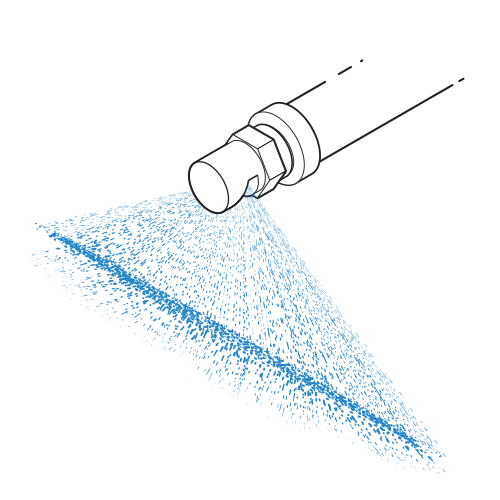
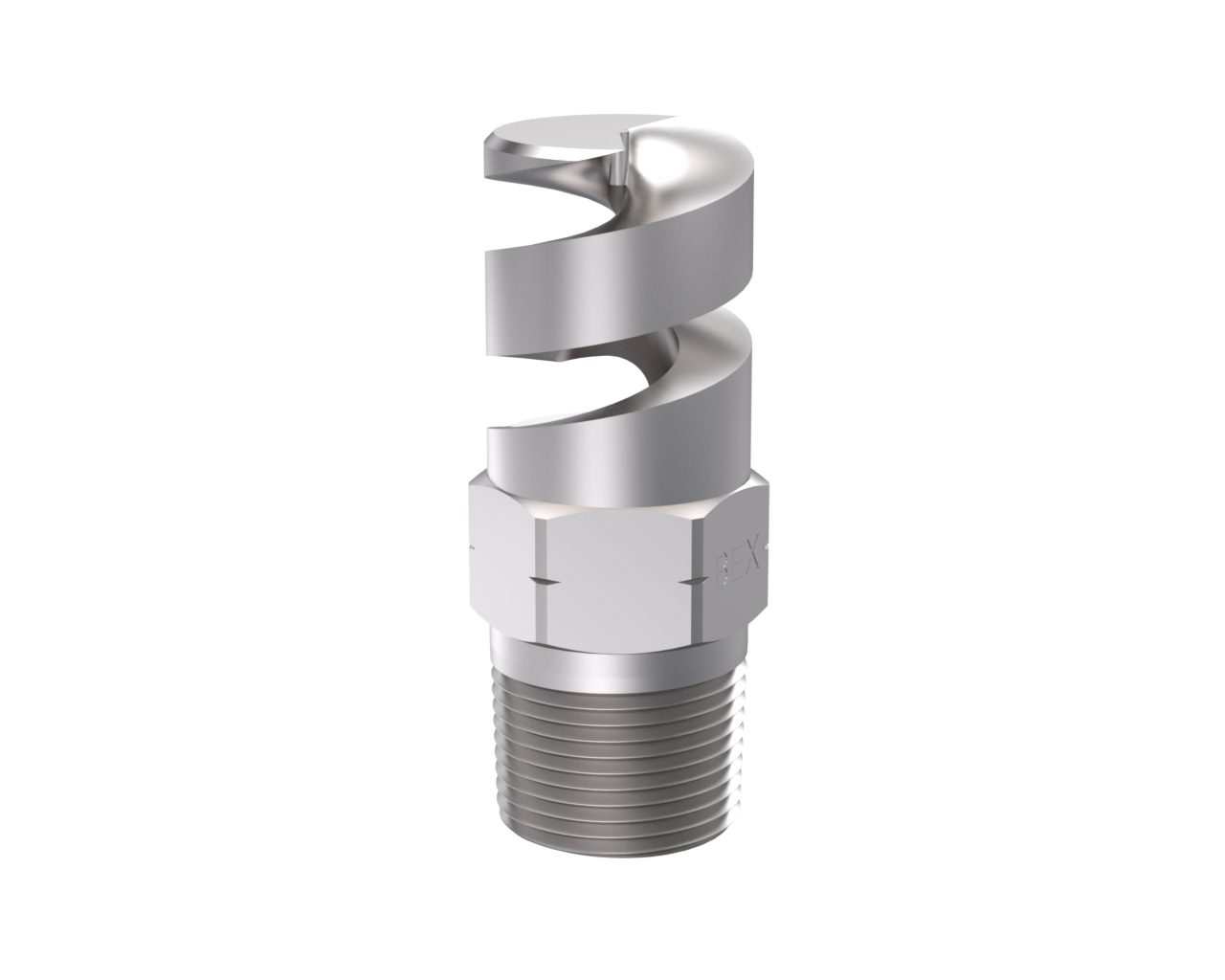
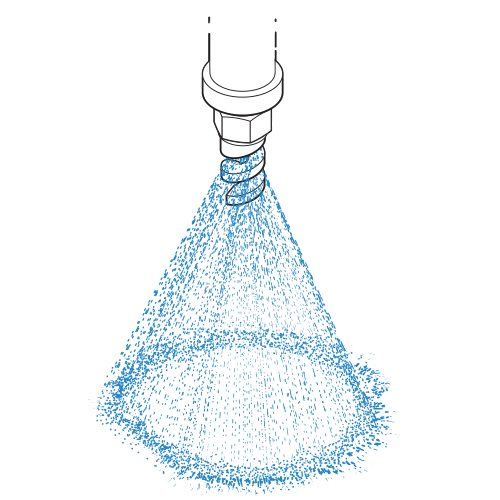
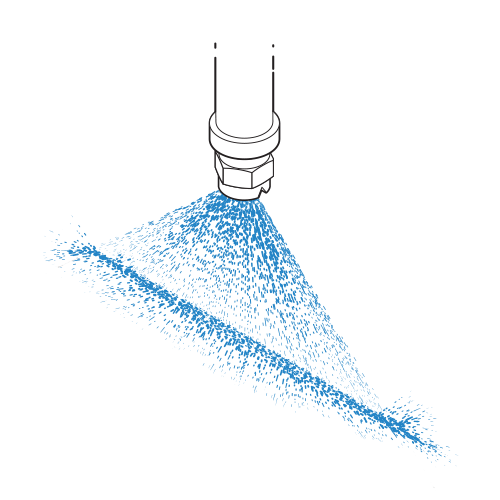
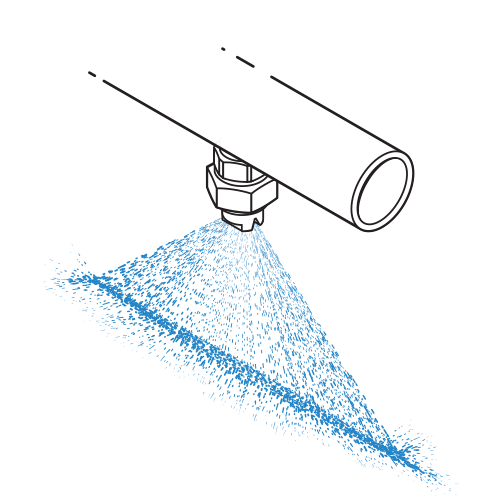
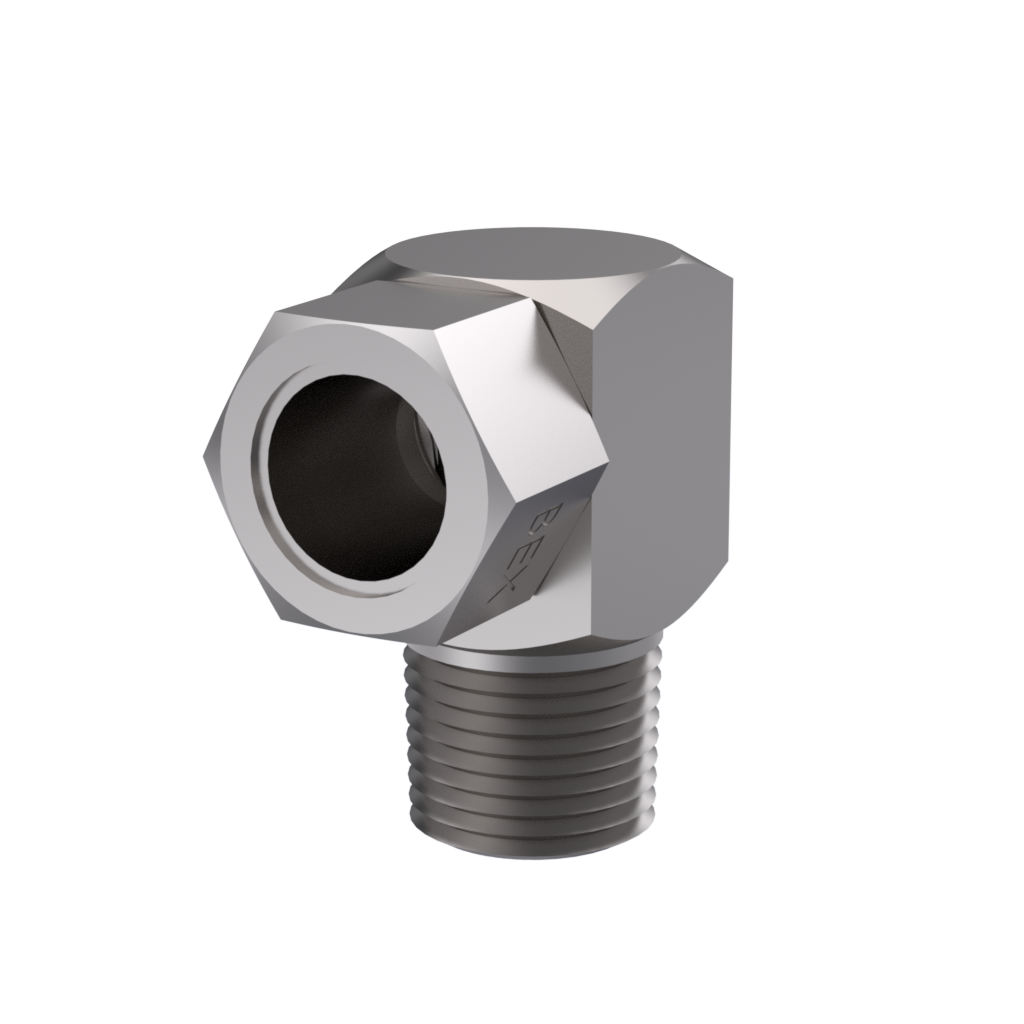
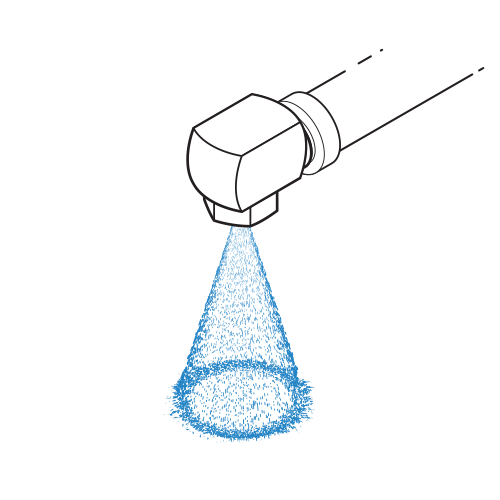
The BEX FL Series flat spray nozzles provide the wide, flat fan-shaped water coverage needed to form an effective wash curtain across the exhaust duct cross-section. For booths where the wash water recirculates and accumulates dissolved and suspended paint solids over time, the YH and YS Series spiral (Twister) nozzles provide an important advantage: their open spiral design resists clogging by the paint-contaminated recirculated water that would rapidly block conventional nozzle orifices.
Surface cleanliness is the foundation of every metal finishing process. No coating — paint, phosphate, electroplate, or anodize — will adhere adequately to a surface that retains oils, drawing compounds, rust, mill scale, or residues from prior process steps. The parts washing and cleaning stages of a pre-treatment line remove these contaminants systematically, using a combination of mechanical action (spray impact), chemical action (detergent or acid), and thermal action (heated solution). Spray nozzles provide mechanical action: the impingement force of a spray jet against the metal surface contributes directly to soil removal, and the uniformity of the spray pattern determines whether every surface of the part is cleaned to the same standard.
The first stage in virtually every metal pre-treatment line is an alkaline cleaning stage that removes manufacturing oils, drawing compounds, stamping lubricants, and corrosion inhibitors from the metal surface. These soils must be completely removed before the phosphating or plating stages — any residual oil will prevent the conversion coating from forming and will cause adhesion failure in the subsequent paint or plate layer. Alkaline cleaner solutions operate at temperatures of 50–80°C and are typically applied by spray at pressures of 1–3 bar, with the spray impact supplementing the chemical and thermal cleaning mechanisms.
Why it matters: oil left on the part stops the conversion coating from forming, and the failure doesn't show until the paint or plate peels at adhesion testing — long after the part left the washer.
The BEX F Series flat fan nozzles in wide spray angles (65°–110°) are the standard choice for tunnel washer spray cleaning stages. Multiple nozzles arranged in opposing banks above and below the conveyor provide overlapping coverage of all part surfaces simultaneously as the parts pass through the washer at conveyor speed. All nozzles for alkaline cleaner service should be specified in 316 stainless steel, which resists the corrosive combination of hot caustic solution and the dissolved salts that accumulate in cleaning baths over time.
Before phosphating, or as a standalone surface preparation step, metal parts are often pickled in dilute hydrochloric, sulphuric, or phosphoric acid to remove rust, mill scale, and light oxide films. The acid reacts with and dissolves the iron oxides on the surface while leaving the base metal largely unaffected. Spray pickling — applying the acid by spray rather than immersion — reduces solution volume, reduces drag-out losses between tanks, and allows more aggressive acid action by continuously refreshing the solution at the metal surface. However, nozzle material selection is critical: the acid concentrations and temperatures used in pickling will corrode brass nozzles within days and attack lower grades of stainless steel.
Why it matters: the wrong nozzle material can corrode within days in hot acid, changing the spray pattern long before it visibly fails and leaving rust or scale on parts headed into phosphating.
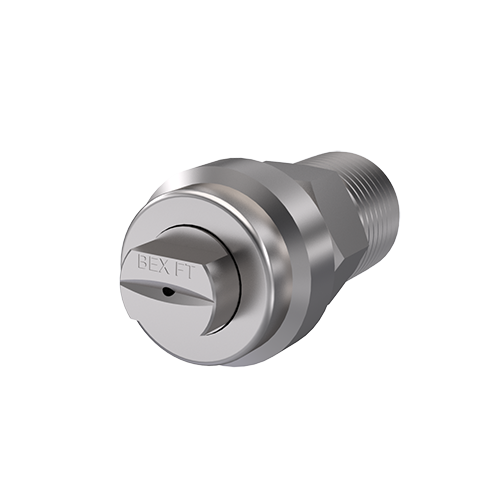
For acid pickling and rust stripping, the BEX F Series flat fan nozzles in PVDF (polyvinylidene fluoride) or 316 stainless steel provide the chemical resistance needed for dilute hydrochloric, sulphuric, or phosphoric acid service. PVDF is particularly preferred for hydrochloric acid service at elevated temperatures, where 316 stainless steel may suffer crevice corrosion over time. For more aggressive stripping applications using mixed acids or higher-concentration solutions, Hastelloy C-276 nozzles provide the maximum corrosion resistance available in metallic material. The F, FT, and ZF Series injection-molded flat fan nozzles provide an economical all-plastic option for lower-concentration, lower-temperature acid spray applications where cost is the primary constraint.
Some metalworking applications require more aggressive mechanical cleaning than standard low-pressure spray can provide. Forged, cast, or hot-rolled parts carry surface scale and adherent oxide that require high-impact spray to dislodge before chemical treatment can proceed. In these applications, narrow-angle, high-impact flat fan nozzles operating at higher supply pressures (5–40 bar) provide the concentrated impingement force needed to break up and remove tenacious surface deposits.
Why it matters: scale that isn't broken up mechanically shields the metal from the chemical stages that follow, so the whole downstream treatment ends up working on a surface it can't reach.
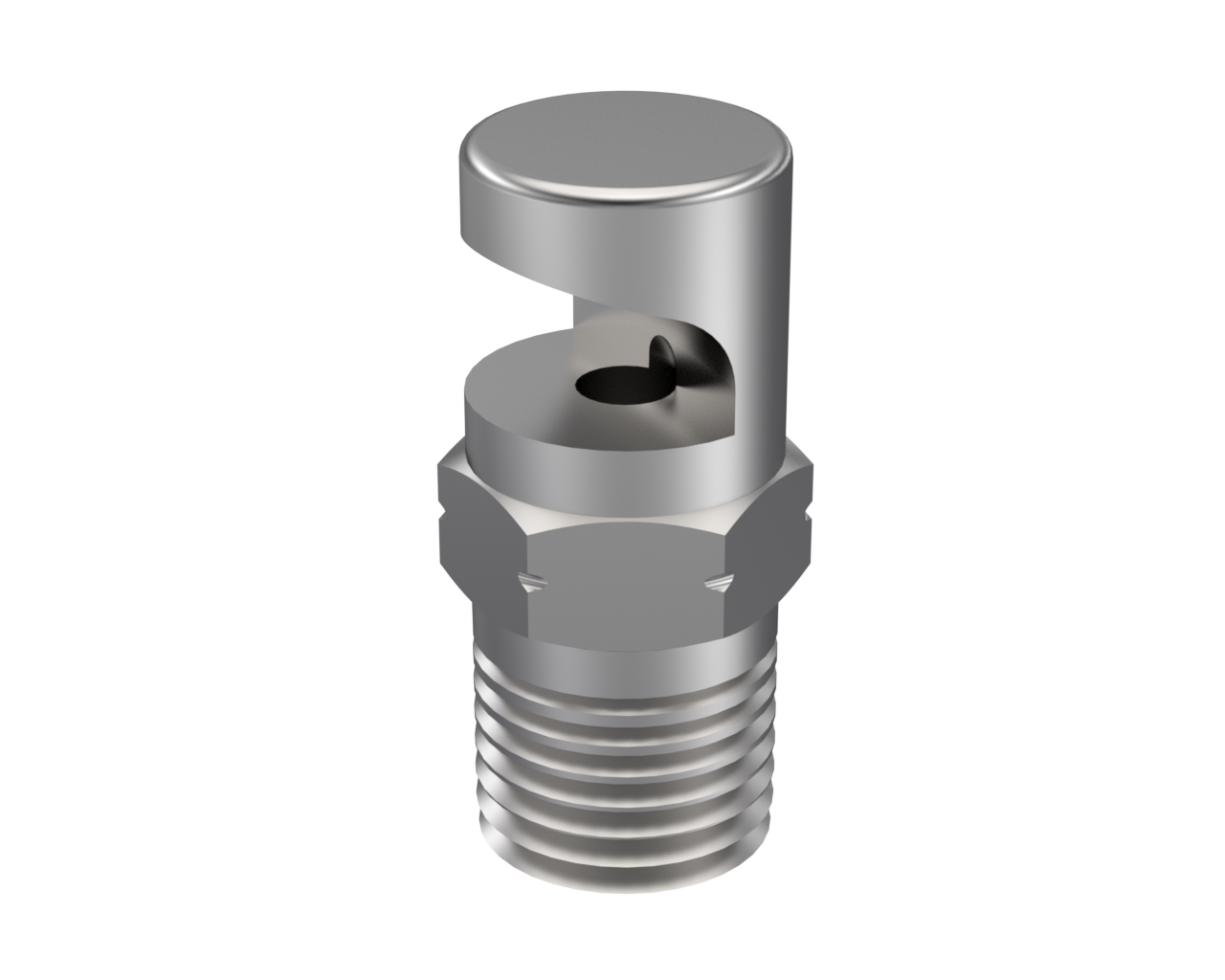
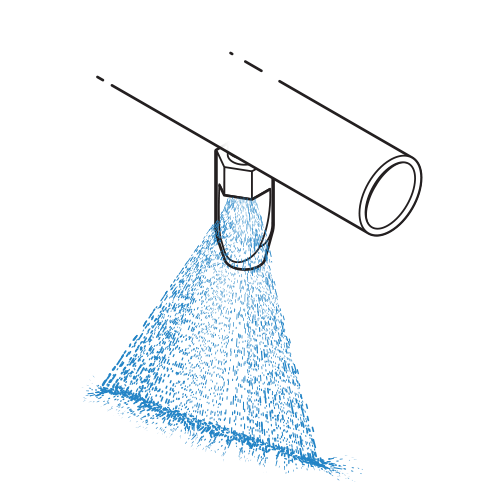
The BEX F Series flat fan nozzles in narrow spray angles (15°–25°) concentrate the spray energy into a tight impact zone, maximizing the impingement force delivered to the part surface at a given supply pressure. For applications requiring even greater impact for scale removal, the FP Series high-impact flat fan nozzles deliver a thinner, more concentrated spray footprint — their sloped ramp ahead of the round orifice creates a flatter, narrower fan pattern that concentrates spray energy more effectively than a standard flat fan for the same supply pressure and flow rate.
Phosphating is a chemical conversion coating process that forms a crystalline inorganic phosphate layer on the metal surface. This layer serves two purposes: it improves corrosion resistance of the bare metal, and — critically — it provides a mechanically interlocked, porous surface that dramatically improves the adhesion of subsequently applied paint or powder coating. The most common types are iron phosphate (simpler, lower cost, primarily used as a paint base) and zinc phosphate (heavier crystalline coating, superior corrosion protection, used in automotive and heavy-duty applications). Manganese phosphate is used for wear resistance on engine and transmission components. In all cases, the phosphating solution reacts chemically with the base metal surface, and the quality of the resulting coating — its crystalline structure, coating weight, and coverage uniformity — depends directly on the uniformity of the spray application and the cleanliness of the substrate.
The spray nozzle in a phosphating stage has a particularly demanding service environment. As the phosphating process proceeds, chemical reactions create by-products, including iron phosphate, which accumulates as a white powdery substance coating the spray nozzles and impeding the spray pattern needed to produce a satisfactory phosphate coating. This means that nozzles for phosphating service must either resist clogging — through their design — or be readily accessible for inspection and cleaning.
Why it matters: phosphate sludge builds up on nozzles as the process runs, so a pattern that starts out uniform degrades over time — and a thin or patchy phosphate layer means paint that fails adhesion and corrosion testing.
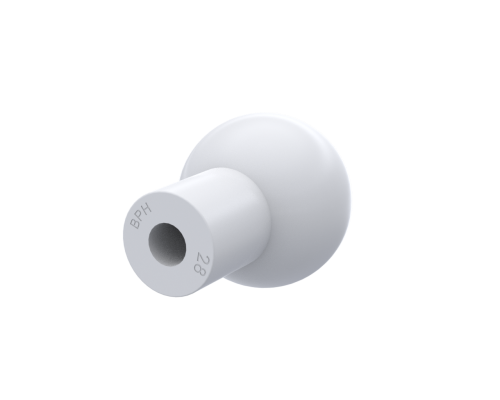
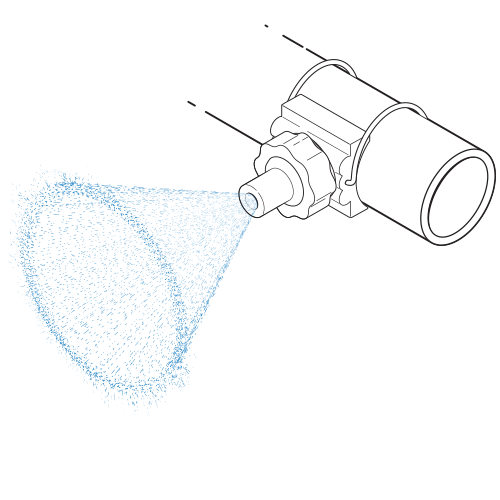
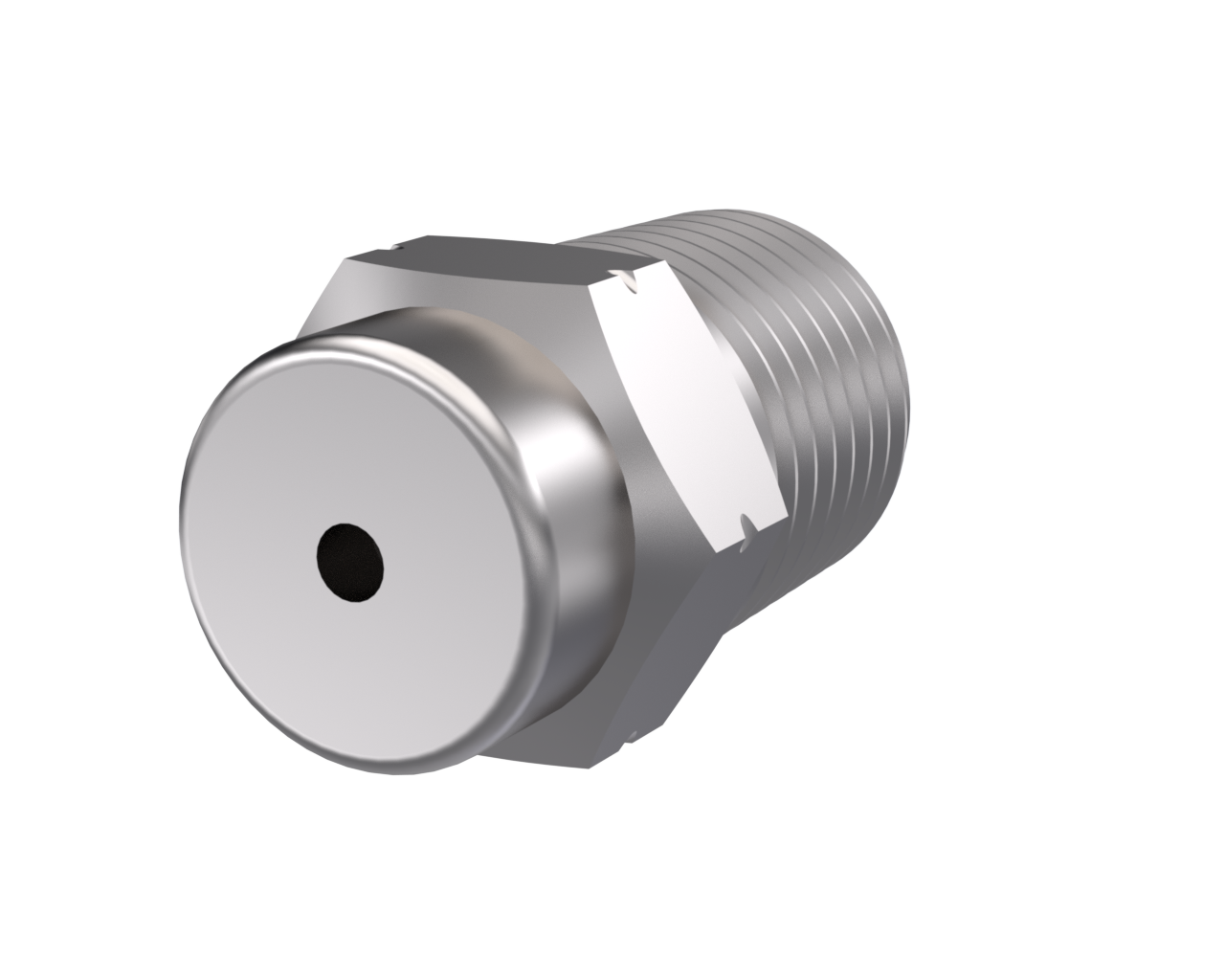
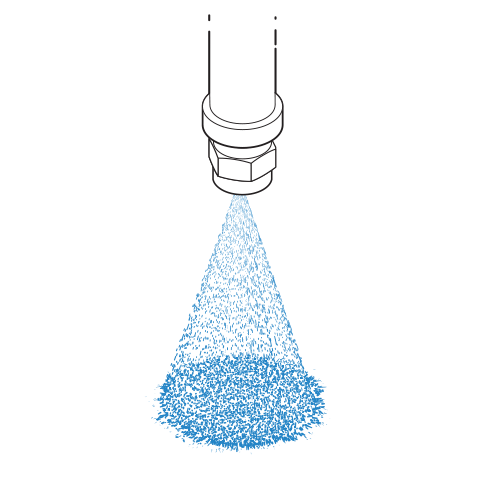
The BEX PH or BPH Series hollow cone nozzles are the recommended choice for spray phosphating stages in tunnel washers. Where the process specification requires extremely uniform, fine-crystalline phosphate coatings — particularly in automotive zinc phosphate lines — the S Series full cone nozzles provide greater uniformity of coverage, with a maintenance schedule that accounts for the regular cleaning that phosphating service demands. For regular cleaning use the zip tips (ZS, ZF) can be used as these can be removed for service and replaced very easily.
Between every active chemical stage of a metal finishing line — cleaner, conditioner, phosphate, electroplate, passivate — one or more rinse stages remove the residual chemical carried over on the parts (called drag-out) before they enter the next active bath. Rinse quality is a critical process variable: plugged spray nozzles that cause poor spray quality lead to inconsistent deposition and coating failures. Inadequate rinsing allows one bath’s chemistry to contaminate the next, progressively degrading the entire line’s performance. The rinse nozzle must deliver enough flow and impact coverage to remove all residual chemicals from every surface of the part — including recesses, holes, and the undersides of complex stampings — in the available contact time as the part passes through the rinse stage.
In a spray rinse stage, parts are conveyed through a rinse tunnel or held in a rinse cabinet while spray nozzles apply clean water (or deionized water in critical applications) from multiple directions. The spray must provide complete surface coverage — any surface that misses the spray retains the chemical drag-out from the previous stage and contaminates the next bath. Rinse water quality and flow rate are both important: higher flow rates reduce the concentration of carried-over chemicals more effectively, and deionized rinse water in the final rinse before painting eliminates mineral spotting from hard water evaporation.
Why it matters: every surface the rinse misses carries drag-out into the next bath, and over time that contamination degrades the chemistry of the whole line, not just one batch.
The BEX F Series flat fan nozzles are the standard choice for spray rinse stages in tunnel washers, providing uniform, overlapping coverage from opposing banks. For final deionized water rinse stages immediately before drying and painting, nozzles should be specified in 316 stainless steel to avoid any metallic ion contamination of the rinse water that could cause surface defects on the finished part.
At the entry and exit points of immersion tanks — where parts are lowered into or raised from the active chemical solution — spray nozzles positioned above the tank opening drench the part with the tank solution as it passes through. This deluge ensures that the part arrives at full chemical concentration immediately upon immersion, and that it is thoroughly coated with the active solution as it exits the tank before entering the next rinse stage, maximising the effective contact time and reaction completeness.
Why it matters: a part that isn't fully wetted as it enters or leaves the tank loses effective contact time, so the reaction is incomplete in exactly the areas the deluge missed.
The BEX S Series full cone nozzles and F Series flat fan nozzles are used for entry and exit deluge spray. The nozzle material must be chemically compatible with the tank solution: PVDF for acid plating solutions, polypropylene for lower-temperature neutral or mildly alkaline solutions, and 316 stainless steel or Hastelloy C-276 for hot alkaline or hot acid service respectively.
The quality of an electroplated deposit — its thickness uniformity, grain structure, surface brightness, and freedom from pitting, burning, or treeing defects — depends critically on the hydrodynamics of the plating solution at the workpiece surface. The plating reaction consumes metal ions from the solution immediately adjacent to the cathode (the workpiece), creating a depleted boundary layer where metal ion concentration is lower than in the bulk solution. If this depleted layer is not continuously refreshed with fresh solution from the bulk bath, the local deposition rate at the surface falls, the current efficiency drops, and deposit quality deteriorates — producing uneven thickness, rough surface texture, and in severe cases, non-adherent or burning deposits.
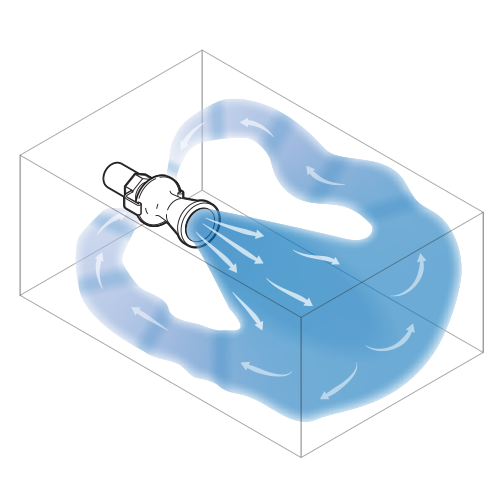
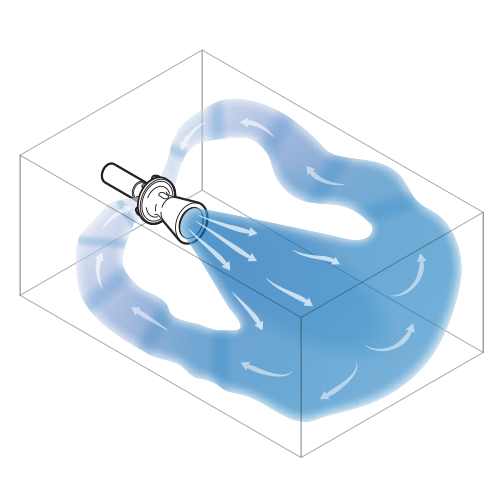
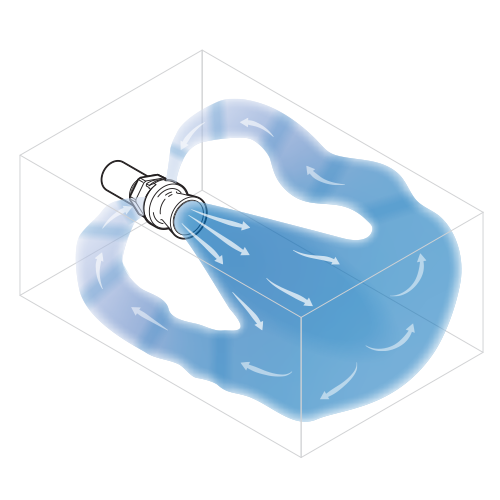
Good agitation of the plating solution is the engineering intervention that controls the boundary layer. An eductor is a specially designed nozzle that causes liquid pumped through the nozzle to exit at high velocity, creating a low-pressure zone that draws in additional surrounding solution — circulating up to four to five times the volume of the pumped liquid through the bath. Eductor-based turbulent flow agitation gives significantly better mixing and boundary layer disruption compared to the classic methods of air agitation and cathode reciprocation, and it does so without introducing air into the bath — a significant advantage, because air agitation oxidises bath additives, generates mist, and cools the bath, all of which increase operating costs.
The selection of eductor material is as important as the selection of the eductor size and placement. Polypropylene is the most commonly used material; stainless steel and PVDF are preferable for higher bath temperatures; Hastelloy is used when extreme corrosion resistance is required. Each electroplating process — nickel, copper, chrome, zinc, tin, precious metal — has its own bath chemistry, temperature, and pH that must be matched to the eductor material.
Why it matters: a dead spot next to the part means a depleted boundary layer, and the deposit there comes out thin, rough, or burnt — while air agitation as an alternative oxidizes additives and cools the bath.
For rack plating tanks, BEX stainless steel eductors (T-M Series) are used for hot alkaline strike baths and for elevated-temperature nickel plating solutions. For chromic acid chrome plating baths and for cold acid zinc or tin baths, BEX PVDF eductors (T-MP Series or TMMP Series) provide the chemical resistance needed. For ambient-temperature acid copper, bright nickel, and zinc-nickel baths, BEX polypropylene eductors (T-MP Series) provide excellent chemical resistance at lower cost. Eductors should be positioned so that they target spots where air bubbles form and provide flow along the entire part surface to prevent dead spots next to the parts — typically angled upward and toward the centre of the tank at 15–30° from horizontal. The BEX Tank Mixing Eductor Purchase Guide provides detailed guidance on eductor sizing, spacing, and pump sizing for specific tank dimensions and turnover rate requirements.
In barrel plating — where small parts are loaded into a rotating perforated barrel submerged in the plating solution — the rotation of the barrel provides some mechanical agitation, but eductor agitation of the bulk solution around the barrel significantly improves bath replenishment at the barrel surface and reduces the concentration gradient between the solution inside and outside the barrel perforations. This improves deposit uniformity across the part load and reduces the cycle time needed to achieve a given minimum deposit thickness.
Why it matters: without good bulk agitation, parts in the middle of a barrel load plate thinner than the rest, so the whole load has to run longer just to get the thinnest parts to specification.
BEX polypropylene eductors (T-MP Series) positioned on the tank wall at barrel height, angled to direct flow across the barrel rotation axis, provide effective bulk solution agitation for barrel plating tanks. Multiple eductors spaced along the tank length ensure uniform bath conditions across the full tank volume. Their low purchase cost and long service life in typical acid zinc, acid copper, and alkaline zinc plating chemistries make them the economical standard specification for barrel plating installations.
The metal finishing industry encompasses the widest range of chemical environments of any single manufacturing sector. A single pre-treatment line may include hot caustic alkaline cleaner, dilute hydrochloric acid pickle, zinc phosphate at pH 2–3, chromic acid passivates, and deionised water final rinse — all within a few metres of conveyor travel. No single nozzle material is appropriate for every stage; material selection must be matched to each specific stage chemistry and temperature.
| Material | Best for |
|---|---|
| 316 Stainless Steel | The baseline specification for alkaline cleaning stages, conditioners, hot water rinses, and nickel or chrome plating baths. Good corrosion resistance to hot caustic solutions, neutral chemistry rinse water, and mildly acidic solutions at near-ambient temperature. |
| PVDF (Polyvinylidene Fluoride) | Required for acid pickling stages (hydrochloric, sulphuric, phosphoric), acid zinc and copper plating baths, chromic acid passivation stages, and any application where the solution is acidic and the temperature exceeds 60°C. The standard specification for all acid-stage nozzles in pre-treatment tunnel washers. |
| Polypropylene | The standard choice for caustic cleaning solutions. |
| Hastelloy C-276 | Specified for the most aggressive chemical environments: hot concentrated hydrochloric acid, mixed acid stripping baths, and chrome plating solutions at elevated temperature where PVDF’s service limit is approached or exceeded. |
| YS Series spiral design — any material | The standard specification for phosphating stages in all pre-treatment lines, and for any stage where recirculated process water containing dissolved salts or reaction by-products would clog conventional nozzle designs. Material is selected to match the specific stage chemistry. |
In metal finishing and metalworking, the spray nozzle is not an afterthought — it is the component that determines whether the process works. The wrong nozzle in a phosphating stage produces an inadequate conversion coating that fails adhesion testing. A clogged rinse nozzle leaves chemical drag-out on the part that contaminates the next bath. A poorly specified eductor in the plating tank creates dead spots where deposit thickness falls below the specification minimum. In every case, correct nozzle selection — the right spray pattern, impact force, flow rate, coverage uniformity, and material for the specific stage chemistry and temperature — is what makes the process deliver consistent results.
BEX Engineering manufactures the complete range of spray nozzles, air atomizing nozzles, and tank mixing eductors needed for every stage of a metal finishing pre-treatment and plating line. With materials from polypropylene to Hastelloy C-276, and product designs from clog-resistant spiral nozzles to precision air atomizing units, BEX provides the application expertise and product range to specify the right solution for every position in your process. Contact BEX Engineering to discuss your metalworking spray nozzle requirements.
For assistance selecting the right nozzle or eductor for your metal finishing application, contact BEX Engineering today.