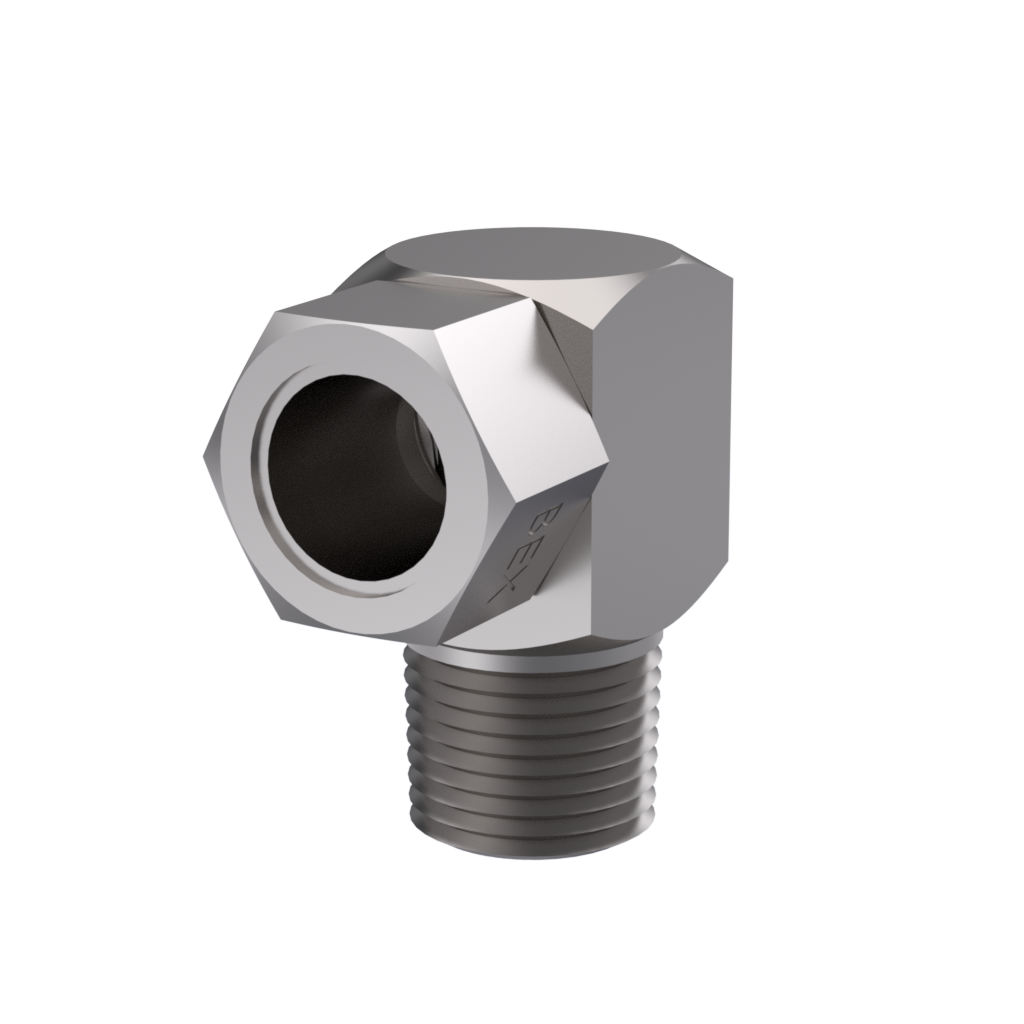
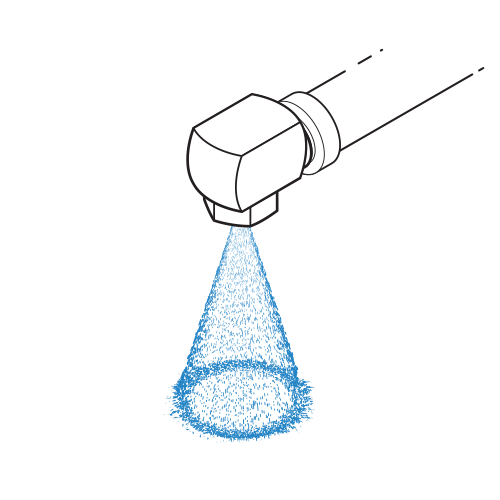
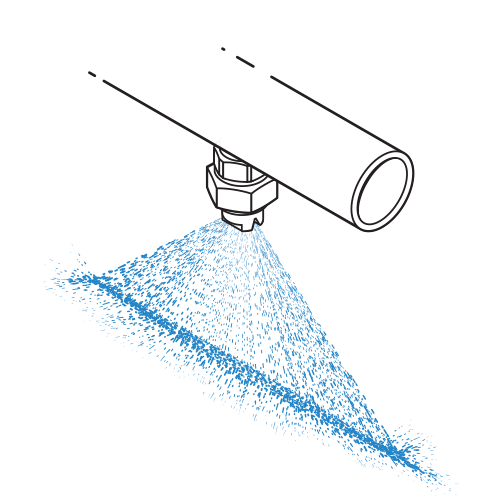
Electronics manufacturing, electroplating, anodizing, and galvanizing operations occupy a unique position in the industrial landscape. These processes demand spray nozzle performance that is simultaneously precise and chemically robust — delivering exacting spray patterns for delicate circuit boards and metal components while withstanding some of the most aggressive chemical environments found anywhere in manufacturing. In this article, we examine the critical spray nozzle applications across electronics production and surface finishing operations, and identify the BEX Engineering products engineered to meet their requirements.
The production of electronic components — from printed circuit boards (PCBs) to semiconductors, connectors, and electrical enclosures — involves a series of wet chemical processes where spray nozzles are essential. The common thread across all these processes is the need for precision: spray coverage must be uniform to avoid defects, and the chemicals involved are often hazardous and expensive, making efficient use a priority.
Many electronic and electrical products incorporate stamped, machined, or formed metal parts — enclosures, chassis, heat sinks, brackets, and contacts. Before these parts can be painted, plated, or assembled, they must be cleaned of oils, greases, and forming lubricants, and then treated with a conversion coating (typically iron or zinc phosphate) that promotes paint adhesion and provides a degree of corrosion resistance.
Phosphating is a multi-stage process: alkaline cleaning, water rinse, phosphate application, water rinse, and often a final chromate or non-chromate seal rinse. At each stage, spray nozzles must deliver the appropriate solution uniformly across the part surfaces. In conveyorized spray systems (where parts travel through a tunnel on a conveyor), nozzle placement, spray angle, and overlap must be carefully engineered to ensure complete coverage of complex part geometries — including recesses, flanges, and blind holes where solution can pool and cause staining or poor coating quality.
Why it matters: a missed recess or dry strip in the washer won't show at the end of the line — it shows up later as paint that fails adhesion testing or an enclosure that corrodes in service, often after a whole run has been coated.
The F Series flat fan nozzles are the workhorses of conveyorized spray wash systems. Available in spray angles from 15° through 110°, they allow engineers to select the precise coverage width for each stage of the washer. Multiple nozzles are arranged on headers along both sides and above the conveyor, with overlapping spray patterns that eliminate dry strips. For stages where thorough wetting of recessed areas is critical, the S Series full cone nozzles provide three-dimensional spray coverage.
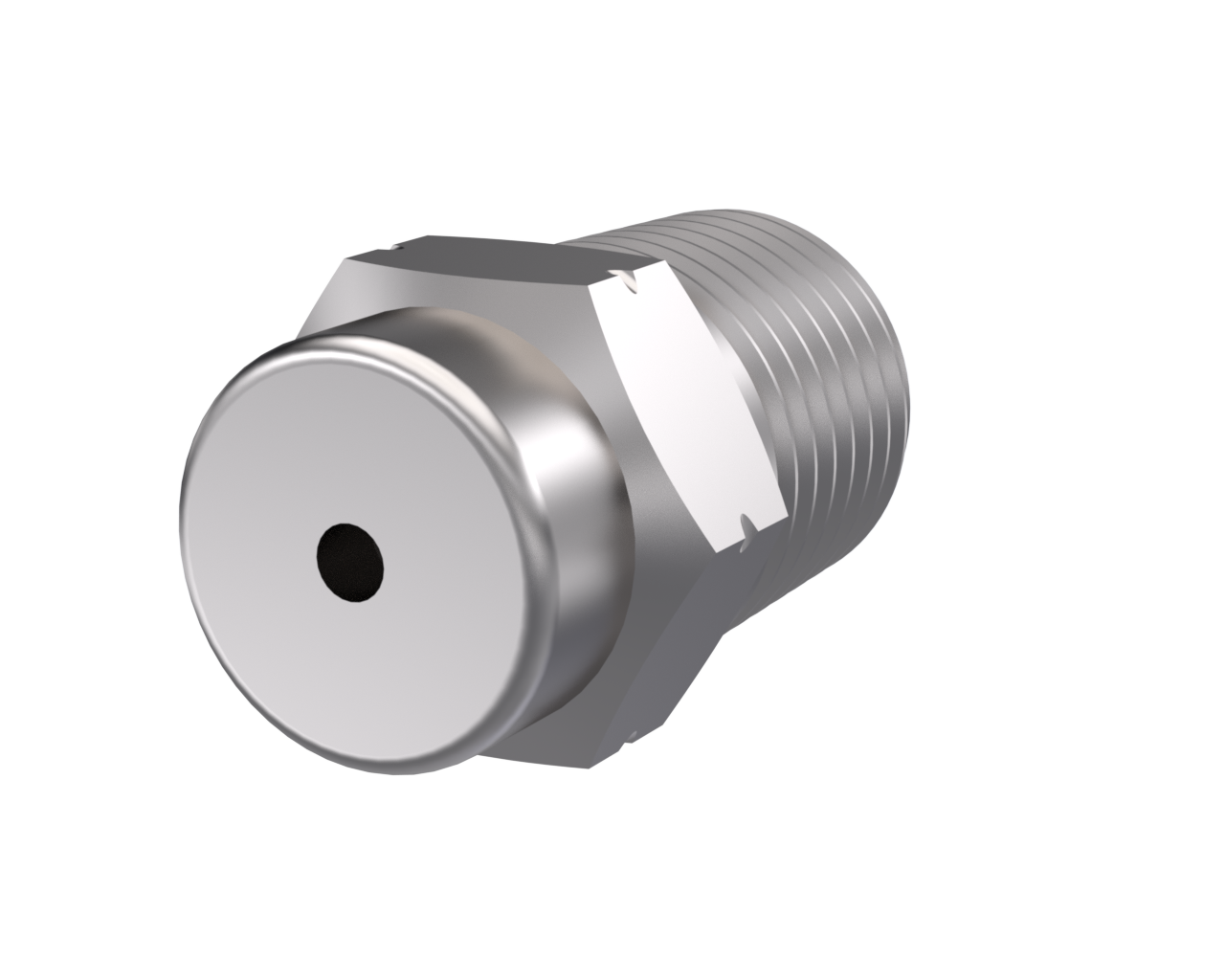
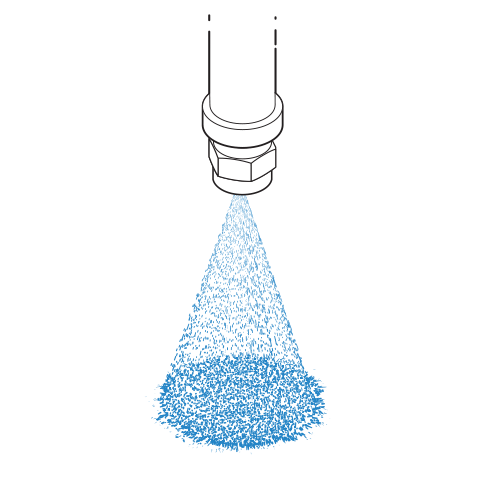
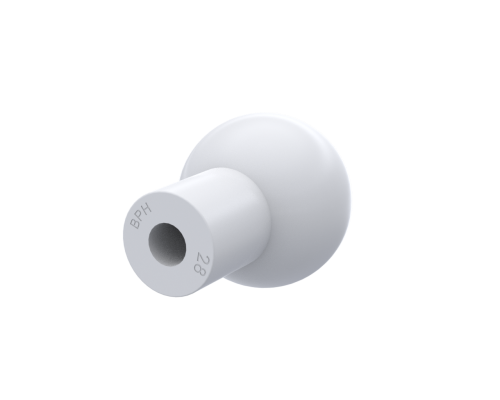
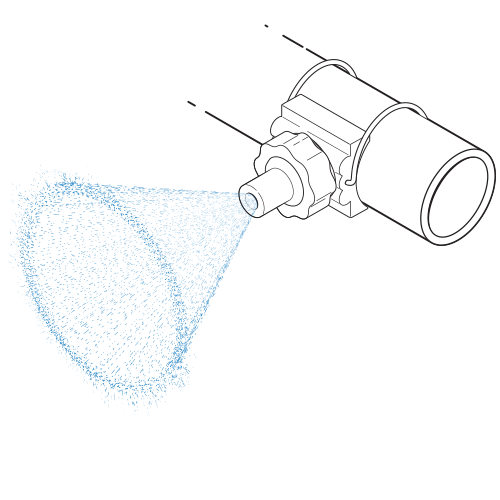
For phosphating stages, the BPH and PH Series inline hollow cone nozzles are the standard choice — their hollow cone pattern delivers chemical solution uniformly across the part surface without the high-impact impingement that would disturb the developing phosphate crystal structure. Where even finer atomisation is required for precision chemical application, the JPL Series air atomizing nozzles offer independent air and liquid controls to dial in the exact droplet size and flow rate needed.
Printed circuit board manufacturing involves numerous wet processing steps — etching, developing photoresist, stripping, cleaning, and rinsing. At each stage, spray nozzles apply process chemicals or rinse water to the board surface as it passes through a conveyorized processing machine. The spray must be extremely uniform: uneven spray in an etching machine, for example, will produce boards with inconsistent copper trace widths, potentially rendering the entire panel scrap.
PCB spray systems typically operate at relatively low pressures (0.5–3 bar) with nozzles spaced closely together on manifolds positioned just above and below the board surface. The nozzles must produce a consistent, well-defined spray pattern even at these low pressures, and they must resist the corrosive effects of the etchant chemistry (typically acidic cupric chloride or alkaline ammoniacal solutions — see: wet PCB etching methods explained and PCB etching process and process control).
Why it matters: etch rate follows spray uniformity, so a single under-performing nozzle can put trace widths out of tolerance across an entire panel — and a nozzle material that leaches into the chemistry contaminates the bath every board on the line runs through.
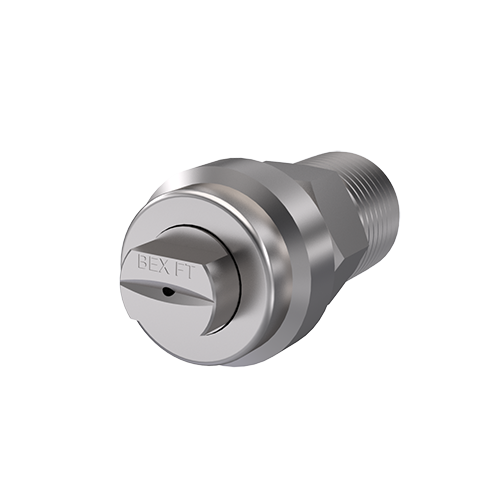
The FT Series injection-moulded flat fan nozzles, F Series flat fan nozzles, and FV Series deflector-type flat fan nozzles are all widely used in PCB processing equipment. For plastic construction, nozzles must be specified in natural (uncoloured) PVDF or natural (uncoloured) polypropylene — the absence of colourant in the resin is critical, as pigments can leach into the process chemistry and contaminate the board surface or the bath. PVC is not used in PCB applications.
Their all-plastic construction provides complete corrosion resistance to the acid and alkaline chemistries used in circuit board manufacturing, and their injection-moulded precision ensures consistent spray patterns from nozzle to nozzle — critical when dozens or hundreds of nozzles must perform identically across a processing machine. For applications requiring metal construction, the F Series flat fan nozzles in 316 stainless steel or Hastelloy handle the most aggressive chemistries.
After cleaning and before assembly or packaging, metal electronic components must be protected from corrosion during storage and transit. Rust inhibitor solutions (volatile corrosion inhibitors, or VCIs, and water-displacing oils) are applied by spray to provide temporary corrosion protection.
Why it matters: corrosion that forms in storage or transit gets found by the customer, not the factory — and over-applying inhibitor to be safe leaves residue that can interfere with downstream soldering, bonding, or coating.

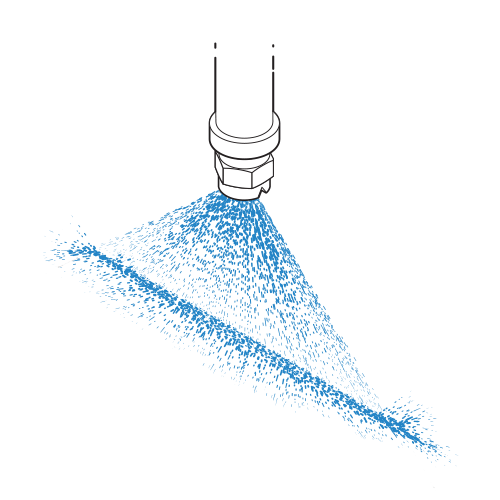
The F Series flat fan nozzles provide even coverage for conveyor-applied rust inhibitors. For finer coatings that minimize material usage and avoid dripping, the JPL Series air atomizing nozzles deposit a thin, uniform film of inhibitor with minimal overspray.
Environmental test chambers used for quality assurance of electronic products require precise humidity control. Test standards (such as those defined by IEC and MIL-STD specifications) mandate specific temperature and humidity conditions for accelerated life testing, corrosion testing, and reliability qualification.
Why it matters: a test result is only valid if the chamber holds the conditions the standard calls for — droplets too large to evaporate wet the samples and skew the data, which can mean repeating a qualification run.
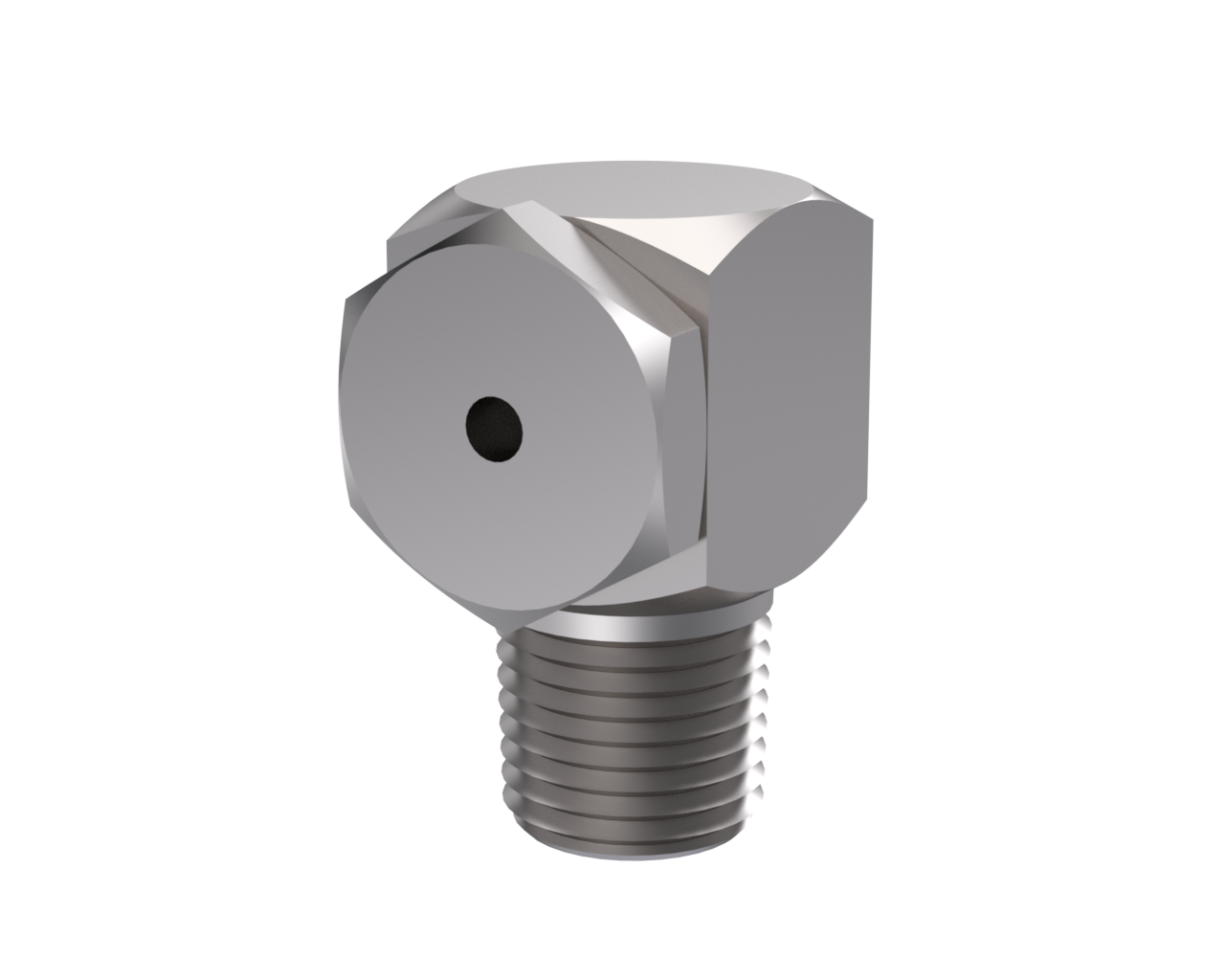
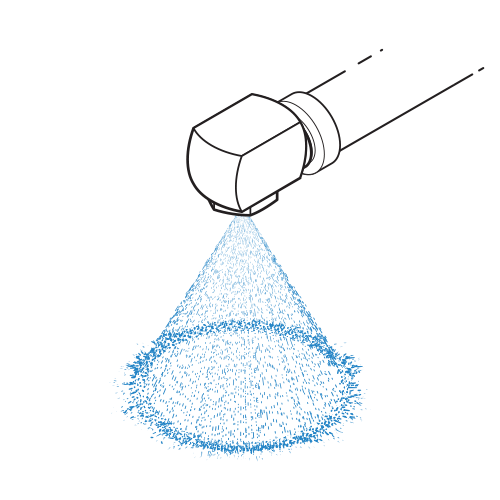
The JPL Series air atomizing nozzles produce the ultra-fine mist (10–50 micrometer droplets) needed for humidity control without surface wetting. Their independently adjustable air and liquid flows allow precise humidity setpoint control. For larger test rooms or factory-floor humidification, the H Series hollow cone nozzles at low pressures provide an effective and simpler alternative.
Surface finishing operations — electroplating, anodizing, and galvanizing — represent some of the most chemically aggressive environments in all of manufacturing. These processes involve concentrated acids (sulfuric, chromic, hydrochloric, phosphoric), caustic alkalis, heavy metal salt solutions (nickel, chromium, zinc, copper, cadmium), and elevated temperatures. Nozzles in these environments must resist chemical attack while performing critical process functions.
Before any plating or anodizing process, parts must be scrupulously clean — any residual oil, oxide, or contamination will cause plating defects (poor adhesion, pitting, uneven coverage). Multi-stage cleaning lines use spray nozzles at each stage: alkaline soak or spray clean, electrocleaning, acid activation, and multiple rinse stages.
After plating, parts must be rinsed thoroughly to remove dragout (the thin film of plating solution carried on the part surface as it exits the plating tank). Inadequate rinsing causes staining, corrosion, and chemical contamination of subsequent process steps. Rinse water usage must also be minimized for both cost and wastewater treatment reasons — spray rinsing is significantly more water-efficient than immersion rinsing because the mechanical action of the spray helps dislodge and dilute the dragout film.
Why it matters: a cleaning defect isn't found until after the part is plated, when the only fix is to strip and re-plate — and dragout that a weak rinse leaves behind is carried straight into the next tank, shortening that bath's life.
The F Series flat fan nozzles in polypropylene construction are the standard for alkaline spray cleaning and rinsing in plating shops, while PVDF construction is specified for acid spray stages — PVDF should not be used with caustic (alkaline) solutions. For aggressive acid chemistries at elevated temperatures, 316 stainless steel or Hastelloy C-276 F Series nozzles provide the corrosion resistance required.
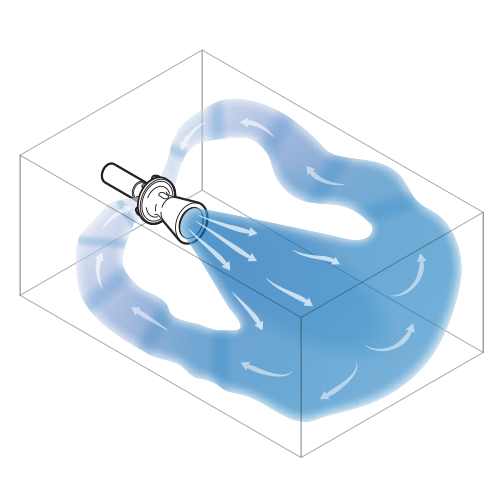
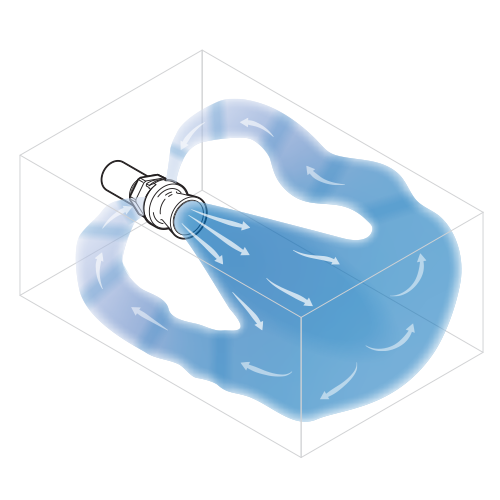
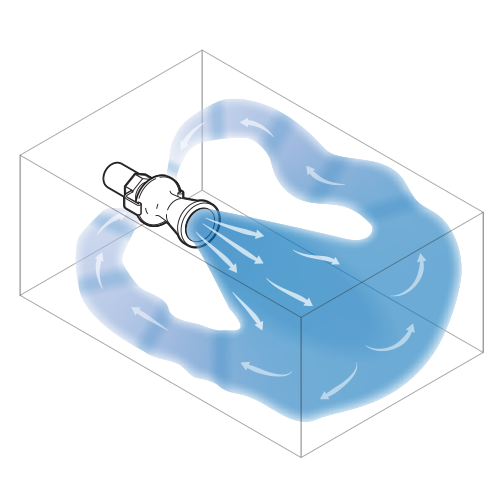
For immersion rinse tanks where solution agitation improves rinsing efficiency, BEX eductors (available in the TMP Series mini plastic eductors and T-MP Series standard plastic eductors) provide efficient mixing with no moving parts — the Venturi effect amplifies the pumped flow by entraining surrounding tank liquid, ensuring uniform solution concentration throughout the tank. Eductor material should be matched to the tank chemistry: polypropylene for alkaline and mild acid baths, PVDF for hot or aggressive acid service.
In electroplating tanks, solution agitation is essential for depositing uniform plating thickness across the part surface. Without agitation, the solution immediately adjacent to the part surface becomes depleted of metal ions, causing thin or porous plating in recessed areas (a phenomenon called "robbing" or "low current density areas"). Eductors installed in plating tanks create controlled circulation patterns that continuously replenish the solution at the part surface.
Why it matters: thin plating in recessed areas is where corrosion failures start, while over-plating to compensate wastes costly metal and cycle time — consistent agitation is what keeps the deposit even across the whole part.
BEX eductors are the ideal solution for plating tank agitation. The TMMP Series mini plastic eductors are used in smaller tanks and where space is limited. The TMP Series regular-size molded eductors (available in polypropylene and PVDF) handle the aggressive chemical environment of most plating baths. For hot alkaline baths and other high-temperature applications, the TM Series stainless steel eductors provide the necessary thermal and chemical resistance. Eductors offer a significant advantage over air agitation (sparging) in plating tanks: they do not introduce air into the solution, which would cause oxidation and pitting defects on plated surfaces (NMFRC: pumped flow eductor agitation research; BEX Tank Mixing Eductor Purchasing Guide).
Anodizing (the electrochemical process that forms a protective oxide layer on aluminum) uses sulfuric acid, chromic acid, or phosphoric acid baths followed by multiple rinse stages. The rinse stages are critical — residual acid left on the workpiece after anodizing will attack the newly formed oxide layer, compromising its protective properties.
Why it matters: residual acid left on a freshly anodized part keeps attacking the oxide layer it just formed, and any carried over into the dye or seal tanks contaminates those baths too.
For above-tank spray rinsing, F Series flat fan nozzles and S Series full cone nozzles should be specified by chemistry: polypropylene construction for alkaline rinse stages, and PVDF for acid rinse stages — PVDF is not suitable for caustic solutions. For in-tank agitation of rinse baths, TMP Series plastic eductors maintain uniform rinse water quality, with eductor material matched to the bath chemistry: polypropylene for alkaline and neutral rinses, PVDF for acid service.
Between plating stages and before final packaging, plated parts may require temporary rust protection — particularly ferrous parts that are partially plated or have exposed base metal areas.
Why it matters: exposed ferrous base metal can start to flash-rust soon after leaving an acid or alkaline bath, and once rust forms on a plated part the usual remedy is stripping and re-plating a part that was otherwise good.
The same F Series and JPL Series solutions described for electronics rust inhibition apply equally here, with material selection adjusted for the more aggressive chemical environment of a plating shop.
The chemical diversity in electronics and surface finishing operations demands careful nozzle material selection:
| Material | Best for |
|---|---|
| PVDF (Polyvinylidene Fluoride) | The premium choice for acid and chemical resistance. Handles sulfuric, chromic, hydrochloric, and phosphoric acids, as well as most plating solutions. Suitable for temperatures up to approximately 120°C. |
| Polypropylene | Good chemical resistance at a lower cost than PVDF, suitable for moderate-temperature acid and alkaline applications. |
| PVC (Polyvinyl Chloride) | Economical for ambient-temperature acid and alkaline service. The standard for PCB processing equipment nozzles. |
| 316 Stainless Steel | Used where mechanical strength is needed or where the chemical environment is compatible (mild alkaline cleaners, rinse water, rust inhibitors). |
| Hastelloy C-276 | Required for severe acid service, particularly where mixed acids or high-temperature acid solutions are involved. |
In electronics and surface finishing, nozzle performance degradation has immediate quality consequences. A partially clogged nozzle in a PCB etching machine produces a visible defect on every board passing through its spray zone. A worn nozzle in a plating pre-treatment washer creates an area of poor phosphate coverage that will fail adhesion testing. Regular nozzle inspection, cleaning, and replacement on a documented maintenance schedule is essential.
Why it matters: on a conveyorized line a degraded nozzle hits every part that passes it, so it keeps producing scrap until it's found — and every minute spent changing nozzles is a minute the whole line is stopped.
BEX nozzles are designed for ease of maintenance: the ZF Series quick-connect fittings allow tool-free nozzle removal and replacement, minimizing downtime for maintenance. The K-Ball ZF assemblies take this further by allowing nozzle angle adjustment and quick swapping — particularly valuable in multi-stage washer systems where different process stages may require different spray characteristics.
Electronics manufacturing and surface finishing operations demand spray nozzles that combine chemical resistance, precision spray performance, and reliable consistency — often in aggressive environments where most materials would quickly fail. From the corrosion-resistant plastic nozzles that clean PCBs to the heavy-duty eductors that agitate plating baths, every nozzle in these processes directly affects product quality and process yield.
BEX Engineering provides a comprehensive range of spray nozzles and eductors specifically designed for the demanding chemical environments of electronics production, electroplating, anodizing, and galvanizing. Contact BEX Engineering to discuss your electronics or surface finishing spray nozzle requirements.