Waste and water treatment facilities and railroad maintenance operations may seem like unlikely companions, but they share practical common ground when it comes to spray nozzle applications: both involve heavy-duty cleaning, challenging material handling, and working with substances that demand robust, clog-resistant equipment. Municipal and industrial wastewater treatment is a growing sector driven by tightening environmental regulations, while railroad maintenance remains one of the most physically demanding environments for any engineered component. In this article, we examine the key spray nozzle applications in both sectors and identify the BEX Engineering products best suited to each.
Wastewater treatment — whether municipal sewage or industrial effluent — involves a series of physical, biological, and chemical processes designed to remove contaminants before the treated water is discharged to the environment or reused. Spray nozzles play essential roles in several stages of the treatment process, from initial screening through final disinfection.
Foam is one of the most visible and persistent operational challenges in wastewater treatment. Biological treatment processes — particularly activated sludge systems — are prone to foam formation caused by the proliferation of filamentous bacteria (notably Nocardia and Microthrix species) (see also: filamentous bacteria foaming in activated sludge) and by the presence of surfactants (soaps, detergents, and industrial chemicals) in the incoming wastewater. Excessive foam can overflow containment structures, block walkways, impair monitoring instruments, reduce treatment efficiency, and create unpleasant conditions for plant operators and neighboring communities.
Foam control in wastewater treatment typically combines two approaches: chemical defoamers applied to suppress foam formation, and mechanical spray systems that physically break down existing foam. Spray nozzles serve both functions — delivering defoamer chemicals and directing water spray at foam surfaces to collapse foam cells.
Why it matters: foam that isn't kept in check overflows basins, blocks walkways, and fouls instruments — and because the problem is continuous, every bit of defoamer wasted through poor distribution is a cost the plant pays every day.
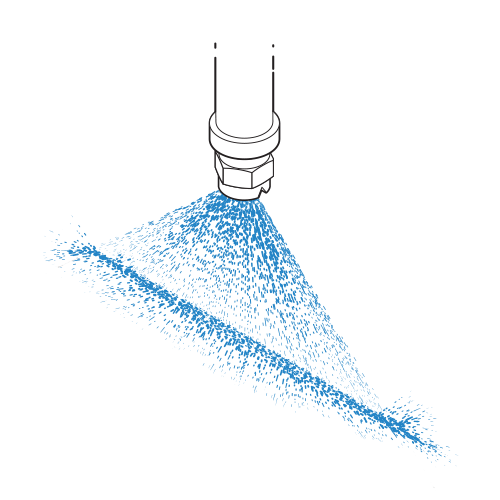
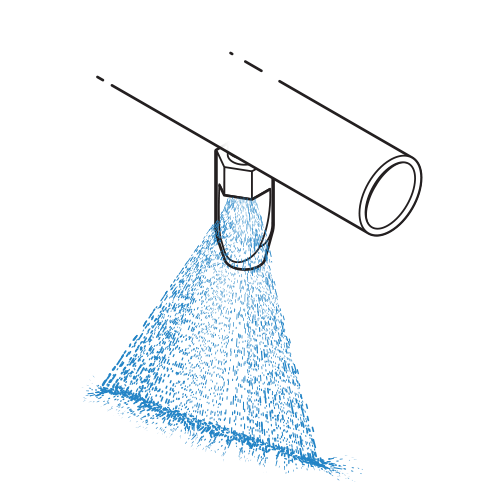
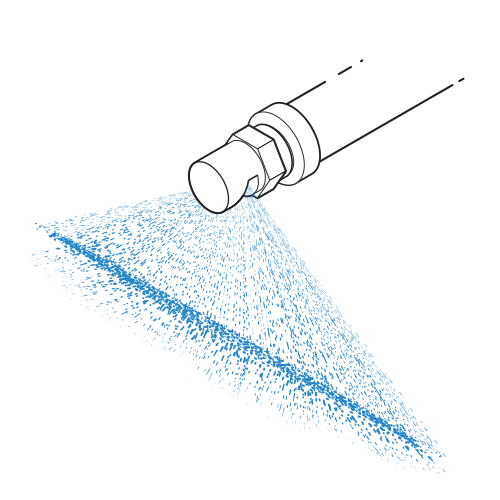
For chemical defoamer application, the JPL Series air atomizing nozzles produce the fine mist that distributes defoamer chemical evenly over the foam surface, maximizing effectiveness while minimizing chemical consumption — an important consideration given the continuous nature of the foam problem and the cost of defoaming agents. For mechanical foam knockdown, the F Series flat fan nozzles or S Series full cone nozzles directed at the foam surface from elevated positions around the basin perimeter deliver the spray impact needed to physically collapse foam. The flat fan pattern covers a wide swath of foam surface with each nozzle, reducing the number of nozzles required.
Wastewater treatment facilities — particularly those handling municipal sewage, food processing wastewater, or rendering plant effluent — can generate intense odors from hydrogen sulfide, mercaptans, ammonia, and volatile organic compounds. Odor control systems use spray nozzles to disperse neutralizing or masking chemicals into the air around odor sources (headworks, sludge handling areas, thickeners) and into enclosed exhaust air streams before release to atmosphere.
The effectiveness of chemical odor control depends on producing very fine droplets that remain suspended in the air long enough to contact and react with the odorous molecules. Larger droplets fall to the ground quickly and waste chemical without achieving adequate air contact.
Why it matters: droplets too large to stay airborne fall out before they ever reach the odor molecules, wasting chemical while the smell carries on to the plant fence line and the neighbors beyond it.
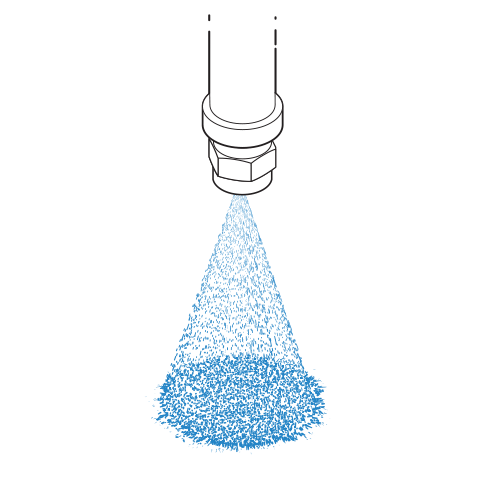
The JPL Series air atomizing nozzles are the preferred choice for airborne odor control because they produce the ultra-fine droplets (10–50 micrometers) needed for effective gas-phase contact with odorous compounds. The independently adjustable air and liquid flows allow operators to optimize the spray for different odor intensities and weather conditions (wind and temperature affect the required droplet size and spray rate). For enclosed scrubber systems where odorous air is ducted through a spray chamber, the S Series full cone nozzles and YS Series spiral nozzles provide thorough spray coverage within the chamber. Larger C Series hollow cone nozzles could also be used.
In trickling filter systems (one of the oldest and most reliable biological treatment technologies), wastewater is distributed over a bed of media (rock, slag, or plastic packing) where biofilm grows and consumes organic pollutants. The distribution system must apply wastewater uniformly over the entire filter bed surface — uneven distribution creates dry spots (where biofilm dries out and dies) and saturated spots (where the biofilm is flooded and becomes anaerobic, producing odors and reducing treatment efficiency).
Rotary distributors are the most common mechanism, but fixed-nozzle distribution systems are also used, particularly in covered or enclosed trickling filters where a rotary arm would be impractical.
Why it matters: dry spots on the filter bed kill the biofilm, and flooded spots turn it anaerobic — either way that part of the filter stops treating wastewater and the plant's effluent quality suffers.
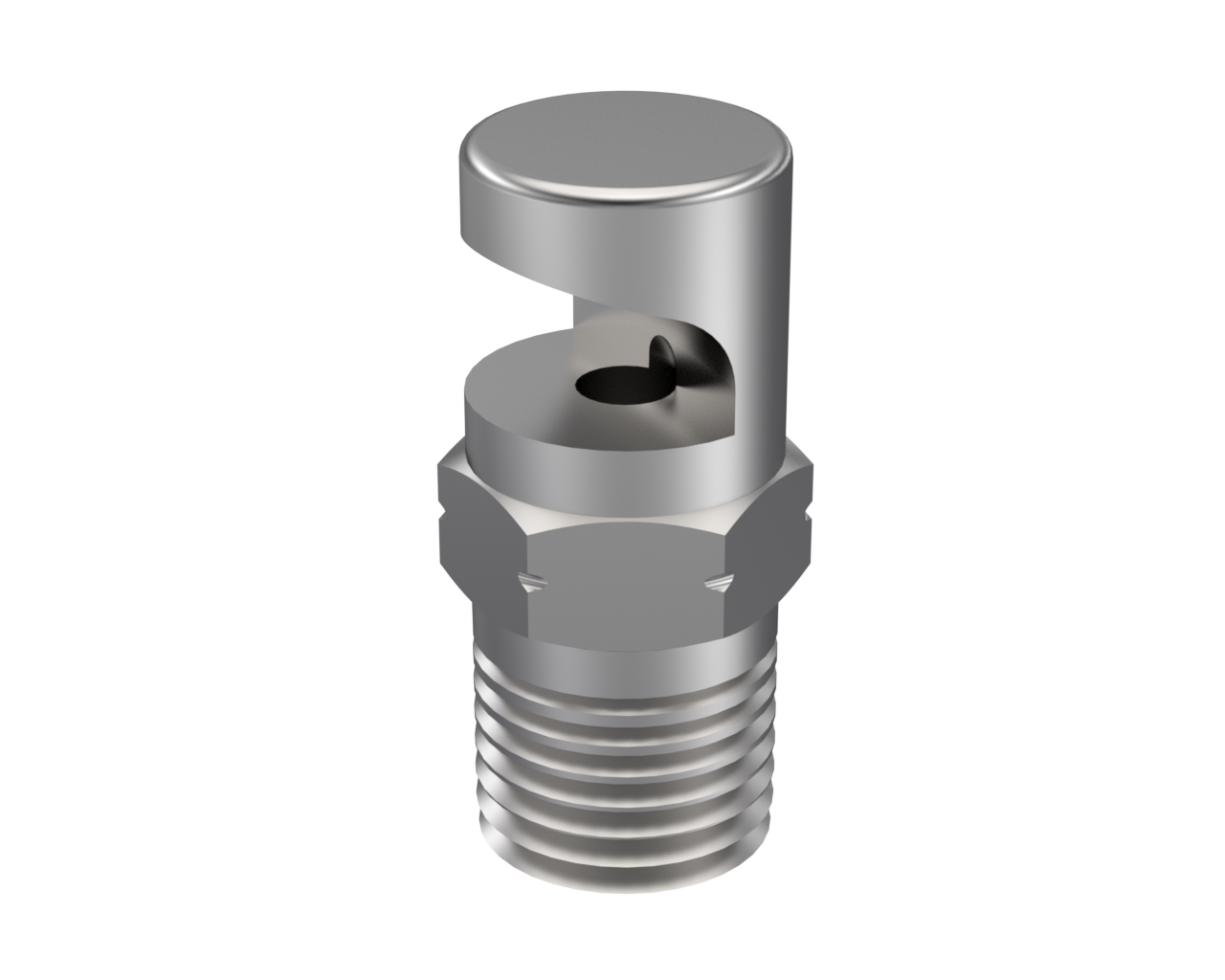
The S Series full cone nozzles provide the uniform distribution pattern needed for trickling filter applications. For installations where the wastewater contains significant suspended solids (which is typical of primary effluent), the YS Series spiral nozzles provide superior clog resistance while maintaining uniform spray distribution. Both are available in 316 stainless steel for the moderately corrosive environment of wastewater service.
Sludge — the concentrated solids removed during wastewater treatment — must be managed through thickening, dewatering, and disposal operations. Spray nozzles are used for several sludge-related tasks: washing thickener mechanisms, flushing sludge transfer lines, diluting sludge for pumping, and cleaning sludge handling equipment (belt presses, centrifuges, and plate-and-frame filter presses).
Belt filter presses, which are widely used for sludge dewatering, require continuous spray washing of the filter belts to prevent blinding (clogging of the belt fabric with fine solids). The wash nozzles must provide high-impact spray at close range to dislodge solids from within the belt weave, and they must operate continuously without clogging despite the extremely dirty environment.
Why it matters: a belt that isn't washed clean blinds with fine solids, so it stops draining water out of the sludge — leaving wetter cake that costs more to haul and dispose of.
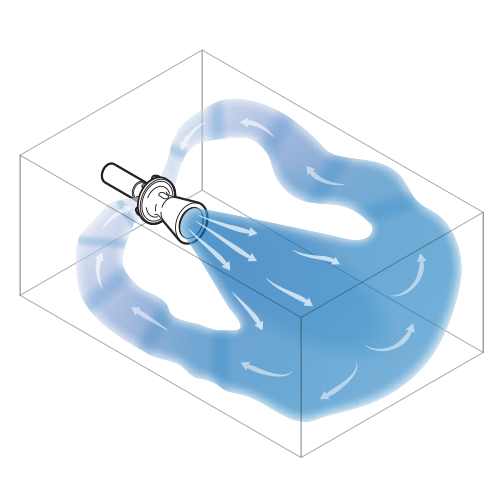
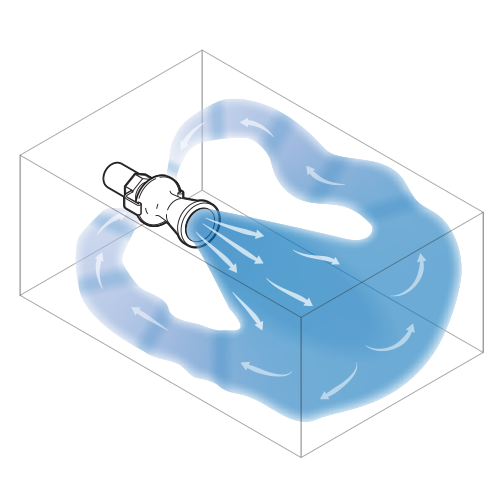
For belt press washing, the F Series flat fan nozzles at elevated pressures (5–15 bar) in narrow spray angles (15°–25°) provide the concentrated impact needed for effective belt cleaning. FP Series nozzles can be used as well and have a somewhat higher impact. Nozzles should be specified in 316 stainless steel with hardened inserts for the abrasive sludge environment. For general sludge line flushing and equipment cleaning, the S and YS Series full cone nozzles provide the flow volume and coverage needed. BEX eductors in the TMP Series (plastic) or TM Series (stainless steel) are used for sludge tank mixing and for maintaining solids in suspension in sludge holding tanks — their Venturi-driven circulation provides efficient mixing with no moving parts, reducing the maintenance burden in the harsh sludge handling environment.
Final effluent disinfection (using chlorine, sodium hypochlorite, UV, or peracetic acid) and chemical dosing throughout the treatment process (coagulants, flocculants, pH adjustment chemicals, nutrients for biological processes) all use spray nozzles for chemical distribution and mixing.
Why it matters: poorly distributed treatment chemicals either under-treat the water and risk a permit violation or get over-dosed to compensate, and in chlorine scrubbing the spray is a safety system, not just a process step.
The S Series full cone nozzles and F Series flat fan nozzles in corrosion-resistant materials (316 stainless steel, PVDF, or polypropylene, depending on the chemical being dosed) handle the range of treatment chemicals used. For chlorine gas scrubbing systems (where chlorine gas used for disinfection must be captured from vent air for safety), the YS Series spiral nozzles provide the reliable, clog-free scrubbing performance needed for this safety-critical application.
Railroad maintenance is an industry of extremes — enormous physical scale, heavy contamination (grease, oil, paint, rust, road grime), and the requirement for thorough cleaning of irregularly shaped and massive equipment. Spray nozzles used in railroad operations must be robust, high-capacity, and capable of handling the tough cleaning challenges that come with maintaining rolling stock.
Railroad boxcars are periodically repainted as part of their maintenance cycle, and the old paint must be removed before new coatings can be applied. Chemical paint strippers are applied and then washed off with high-pressure spray, removing the old paint and chemical residue together. This is followed by rinse stages that prepare the bare metal surface for primer and topcoat application.
Why it matters: any softened paint or stripper residue left on the car becomes a weak spot under the new primer, so the new coating starts failing early in exactly the places the wash-off missed.
For high-pressure paint removal wash-off, the F and FP Series flat fan nozzles in narrow spray angles (15°–25°) at pressures of 30–100 bar deliver the concentrated impact force needed to strip softened paint from the car surface. For subsequent rinsing, wider-angle F Series nozzles (65°–95°) provide broad coverage at lower pressures. In conveyorized railcar wash systems, the nozzles are arranged on vertical and overhead headers to provide complete coverage of the car's exterior surfaces. The FP and FL Series deflector-type flat fan nozzles are used where the heavy contamination in recirculated wash water demands maximum clog resistance.
Locomotives accumulate heavy deposits of grease, oil, brake dust, fuel residue, and road grime that must be periodically removed — both for maintenance inspection purposes (contamination can mask cracks and defects during visual inspection) and for operational reasons (grease and oil buildup on components creates fire hazards and accelerates corrosion).
Locomotive wash-down is typically performed in dedicated wash bays equipped with spray headers on both sides and overhead. The nozzles must handle the irregular geometry of a locomotive — engine compartments, truck assemblies (bogies), fuel tanks, and cab exteriors — delivering enough cleaning impact to remove heavy, baked-on contamination.
Why it matters: grease and grime left on a locomotive can hide cracks and defects from inspectors, and oil buildup on hot components is a fire hazard waiting for an ignition source.
The F and FP Series flat fan nozzles in a range of spray angles provide the flexibility to address different areas of the locomotive. Narrow angles for heavy contamination on truck assemblies and undercarriage components, wider angles for cab and body panels. The S Series full cone nozzles at higher flow rates provide the volume needed for effective flush cleaning of engine compartments. For the toughest deposits, high-pressure F Series 0° (solid stream) nozzles deliver maximum impact force for targeted cleaning.
Railroad tank cars carry a wide range of liquids — petroleum products, chemicals, food-grade oils, and acids — and must be thoroughly cleaned between loads, particularly when switching from one product to another (product changeover). The interior surfaces of a tank car must be cleaned to a standard that prevents contamination of the next load.
Tank car washing is performed at specialized cleaning facilities using spray nozzles that are inserted through the tank car's top opening (manway) and directed to systematically wash the entire interior surface. The challenges include the large internal volume (typically 49,000–125,000 liters, or 13,000–33,000 US gallons) (Union Pacific: how to clean and inspect rail cars), the confined entry point (a single manway opening of 500–600 mm diameter), and the variety of residues that must be removed (heavy oils, chemical residues, dried product) (see also: tank car cleaning methods).
Why it matters: residue left from one load contaminates the next — in a food-grade or chemical product, that can mean rejecting an entire tank car's worth of product and repeating the clean.
Both wastewater treatment and railroad applications present challenging environments for nozzle materials, though the challenges are different:
Wastewater treatment and railroad maintenance may operate in very different contexts, but both rely on spray nozzles to solve fundamental operational challenges — controlling foam and odor in treatment basins, distributing wastewater over biological filters, cleaning the interior of 100,000-liter tank cars, or stripping decades-old paint from a boxcar. In both sectors, the nozzle must perform reliably in dirty, demanding conditions where clogging, corrosion, and wear are constant threats.
BEX Engineering provides spray nozzles and tank cleaning equipment engineered for the tough demands of environmental infrastructure and heavy transportation maintenance. Contact BEX Engineering to discuss your wastewater treatment or railroad spray nozzle requirements.