Agriculture is one of the most spray-intensive industries on earth, yet it is rarely the first sector that comes to mind when people think about industrial spray nozzles. From the moment seed is planted to the moment product reaches a processing facility, spray technology is at work at nearly every stage: applying nutrients to crops, keeping workers and livestock cool during summer heat, suppressing dust on feedlots and grain handling operations, maintaining humidity in greenhouses and post-harvest storage, and wetting materials to prevent airborne particulate. In this article, we examine the key spray nozzle applications across agricultural operations — crop production, livestock facilities, grain handling, and greenhouse growing — and identify the specific BEX Engineering products best suited to each task.
The application of liquid fertilizers, herbicides, fungicides, and insecticides is arguably the most economically critical spray application in agriculture. Getting it right — the right rate, the right droplet size, the right distribution uniformity — determines whether a crop reaches its yield potential or falls short. Getting it wrong wastes expensive inputs, harms the environment through run-off or drift, and can damage the very crop it was meant to protect.
Droplet size is the central engineering variable in agrochemical application. Large droplets (above 400–500 μm VMD) resist wind drift but bounce off waxy leaf surfaces and provide poor coverage. Fine droplets (below 100 μm) achieve excellent leaf coverage but are prone to drift onto non-target areas and to evaporation before reaching the crop canopy. For most field applications, the target droplet size range is 150–350 μm, representing a balance between coverage quality, drift control, and biological efficacy. Nozzle selection, operating pressure, and liquid flow rate all directly influence where within this range the application falls.
Liquid fertilizer applied by boom sprayer to field crops requires uniform coverage across the full boom width. Any variation in flow rate between nozzles results in uneven application — strips of under-fertilized crop adjacent to strips that received excess nutrient. Boom systems typically operate at low to moderate pressures (1–3 bar / 15–45 psi) to control droplet size and minimize drift.
Why it matters: one worn or mismatched nozzle on the boom leaves a strip of under-fed crop running the length of the field — a yield loss you won't see until harvest, paid for with fertilizer that went somewhere else.
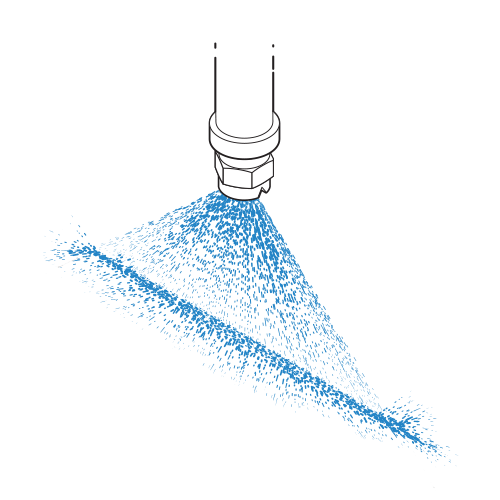
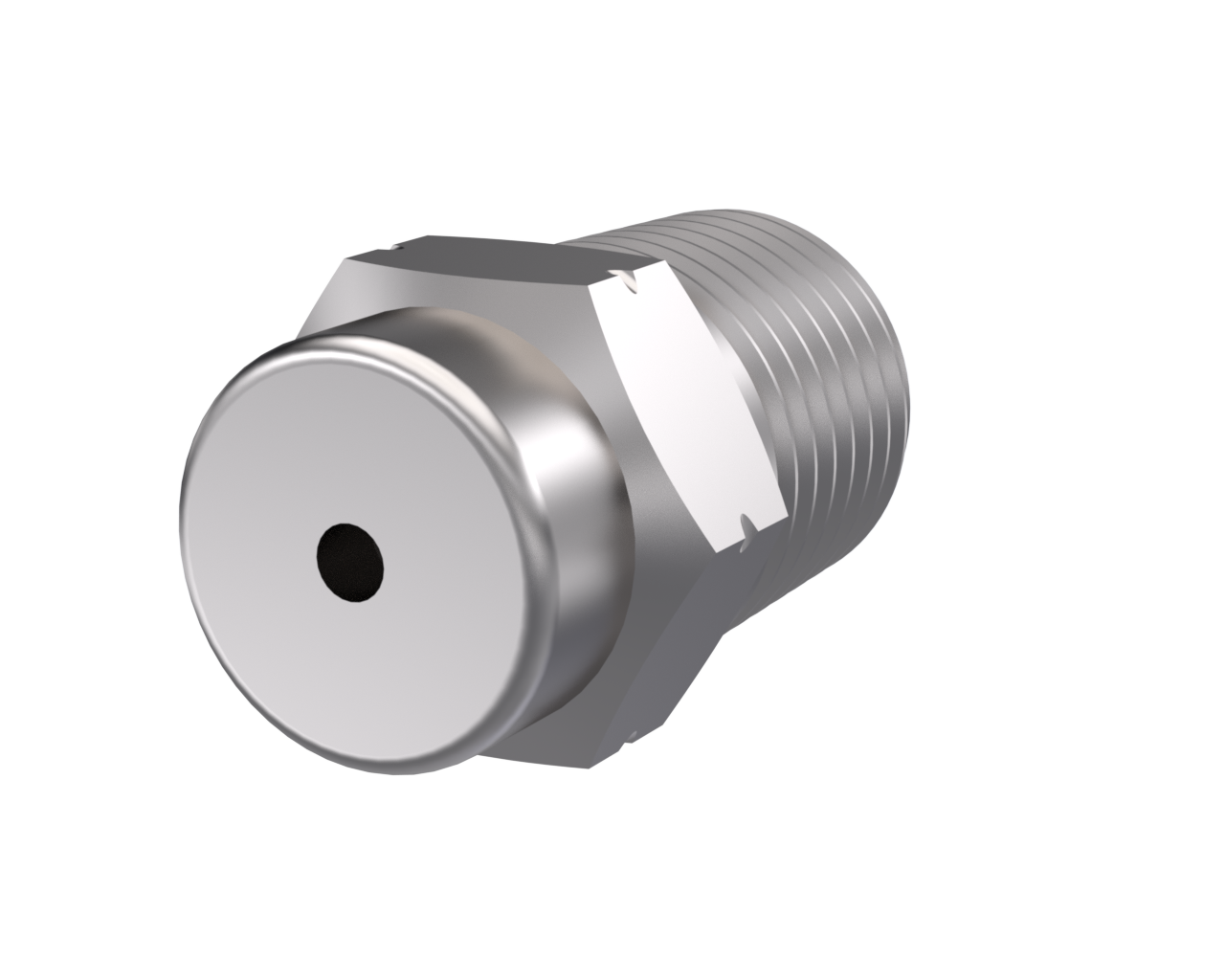
The BEX F Series flat fan nozzles are a natural fit for boom sprayer fertilizer applications. Their flat, tapered spray pattern allows adjacent nozzles to be spaced for overlapping coverage — ensuring uniform distribution across the full swath width with no dry strips. The F Series is available in spray angles from 65° to 110°, with the wider angles (80°–110°) preferred for boom applications as they allow greater nozzle-to-nozzle spacing while maintaining overlap. For fertilizer applications where chemical resistance is needed, injection-moulded F Series flat fan nozzles in polypropylene construction provide an economical, corrosion-proof option. Their replaceable design suits the high-wear reality of boom spraying, where nozzles are treated as consumable items and replaced as part of regular maintenance.
Heat stress is one of the most significant causes of economic loss in commercial livestock and poultry production. Dairy cattle experiencing heat stress reduce milk production, become more susceptible to disease, and suffer reduced conception rates. Broiler chickens above their thermocomfort zone slow their growth, consume less feed, and in severe heat events experience significant mortality. Pigs are particularly heat-sensitive; at temperatures above 25°C, sows reduce feed intake and boars experience reduced semen quality. In all species, the financial cost of heat stress — in reduced output, increased mortality, and compromised reproduction — dwarfs the cost of installing an effective cooling system.
Evaporative cooling using fine water mist is the most effective and energy-efficient method of reducing the sensible air temperature in an animal housing facility. When small water droplets are introduced into a hot, dry air stream, they absorb latent heat from the surrounding air as they evaporate, reducing air temperature toward the wet-bulb temperature. In hot, arid climates, this can reduce the effective air temperature by 8–14°C — a difference that can move animals from severe heat stress back into their thermocomfort zone. In more humid climates, the absolute temperature reduction is smaller, but supplemental fogging combined with adequate ventilation still provides meaningful relief.
Modern broiler and layer houses use tunnel ventilation — large fans at one end pulling air through the length of the building. Fogging nozzles installed at the air inlet end of the house introduce fine mist into the incoming air stream. As the air travels the length of the house, the mist evaporates, cooling the air before it reaches the birds. The droplets must be small enough to evaporate before reaching the birds or the litter — wet litter causes ammonia production and footpad dermatitis, and wet birds are at risk of chilling when ventilation rates are reduced.
Why it matters: mist that doesn't evaporate before it reaches the floor wets the litter, and wet litter means ammonia and footpad problems — so the cooling system can end up creating the health issues it was meant to prevent.
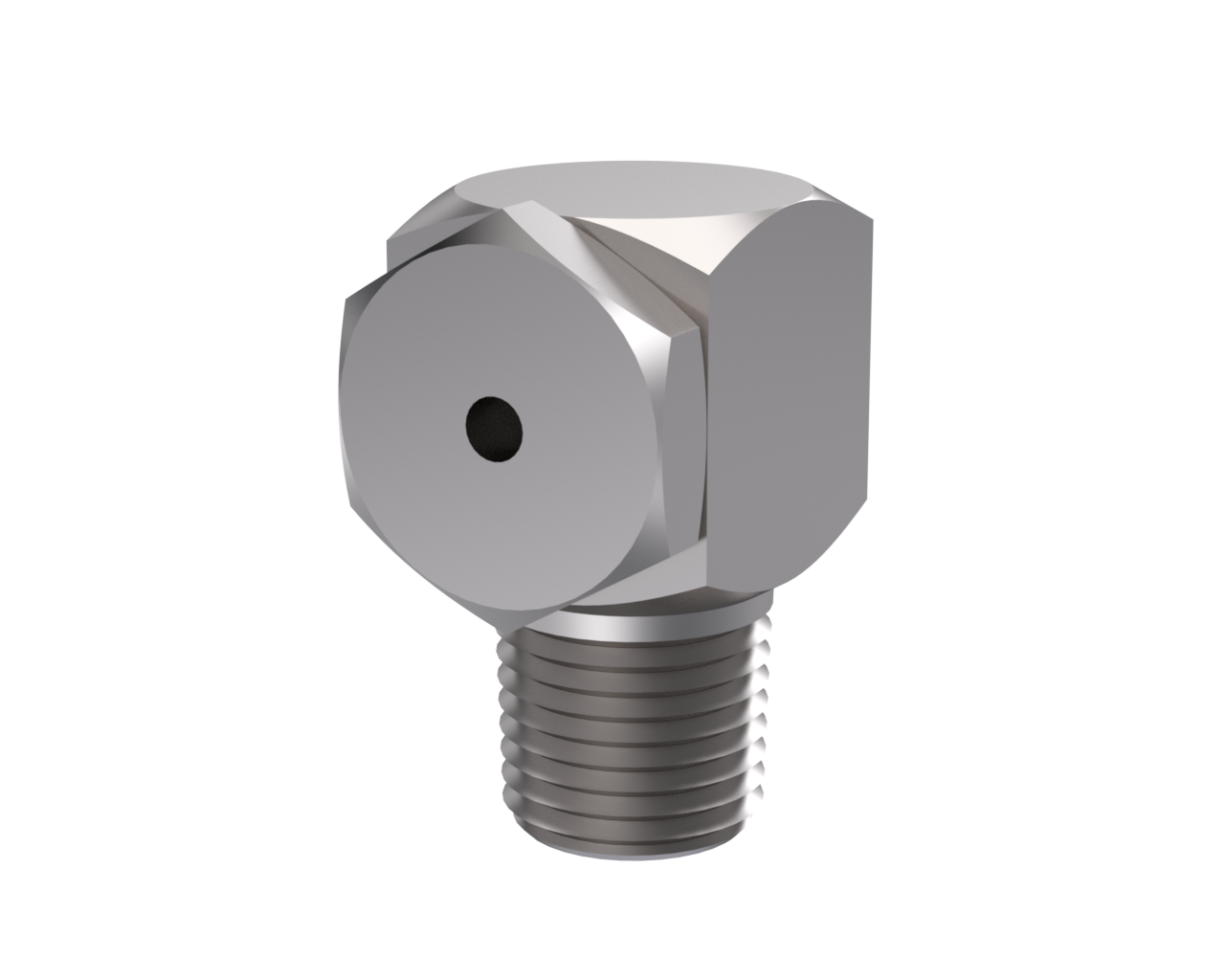
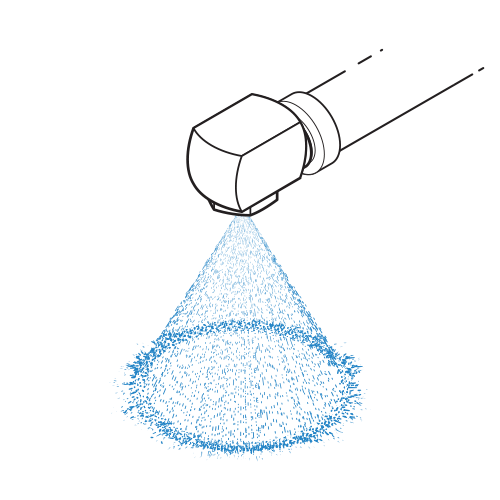
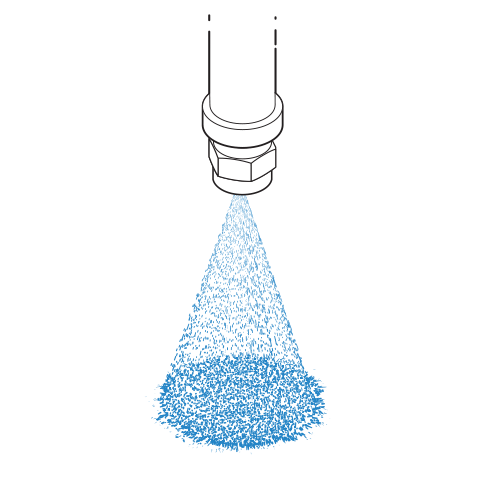
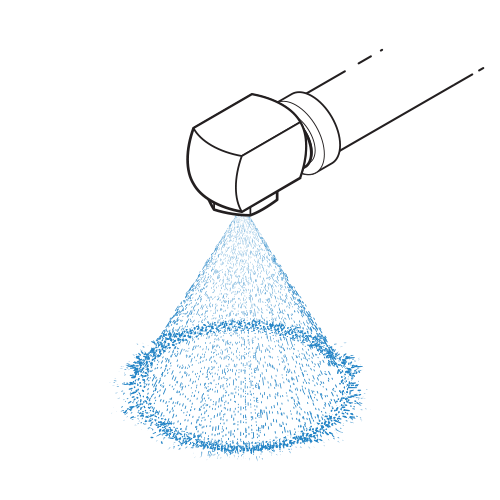
The BEX H Series hollow cone nozzles at low operating pressures (1–3 bar) produce droplets in the 100–300 μm range — fine enough for rapid evaporation in most conditions while remaining manageable with standard agricultural water supplies. For installations requiring a finer mist where evaporation must be more rapid — such as houses in more humid climates or where fogging occurs closer to the birds — the JPL Series air atomizing nozzles produce ultra-fine droplets (10–50 μm) that evaporate almost immediately upon release, providing effective cooling with no risk of wetting birds or litter. Their independent air and liquid controls allow precise adjustment of mist output to match ambient conditions.
Dairy cow cooling takes two distinct forms: soaker systems that wet the cow’s hide directly (taking advantage of evaporative cooling from the skin surface), and misting systems that cool the surrounding air. Soakers are used in holding areas and feeding alleys, where cows are stationary and can be cycled through wetting and drying phases. The nozzles must produce large enough droplets to penetrate the coat and wet the skin, but must not create puddles or excess runoff on the floor.
Why it matters: a soaker that only wets the top of the coat doesn't reach the skin where the cooling happens, while one that over-sprays turns the holding area into mud — either way the cows stay hot.
The BEX S Series full cone nozzles in medium flow rates are the standard choice for dairy soaker systems. Their uniform full cone pattern provides complete coverage across the animal’s back and sides from a single nozzle position, and their predictable flow rates at a given pressure allow system designers to size pumps and pipework accurately. For feed bunk and holding pen misters where the goal is air cooling rather than direct wetting, the C Series hydraulic atomizers or JPL Series air atomizing nozzles provide the fine mist needed for effective evaporative cooling without drenching the animals.
Greenhouses present the most demanding humidity and temperature control challenge in agriculture. In summer, solar radiation and poor air exchange can push greenhouse temperatures 15–20°C above ambient, far beyond the optimum growth range for most crops. At the same time, many crops require specific relative humidity levels (typically 60–85% RH) to prevent physiological disorders and disease. Low humidity causes excessive transpiration and leaf scorch; high humidity promotes Botrytis and other fungal diseases. A well-designed fogging system can simultaneously cool the air and maintain the correct humidity, achieving both goals with a single installation.
Why it matters: the same system has to cool the air and hold humidity in a narrow band, and droplets that land on foliage instead of evaporating create exactly the wet-leaf conditions that let Botrytis and other diseases take hold.


The BEX JPL Series air atomizing nozzles are the ideal choice for greenhouse fogging and humidification. Their ultra-fine mist evaporates rapidly and completely, introducing water vapour into the air without wetting plant surfaces or creating drip. This is critical in greenhouse environments where wet foliage promotes disease. The C Series hollow cone nozzles at very low flow rates provide an economical alternative for greenhouses where a somewhat coarser mist is acceptable and compressed air is not readily available. Both series are available in corrosion-resistant materials appropriate for the fertilizer-containing water supplies common in greenhouse operations.
Agricultural dust is both an occupational health hazard and a fire and explosion risk. Grain dusts from cereals, pulses, and oilseeds are combustible and, when suspended in air at sufficient concentration, are explosive. Grain elevator explosions have caused fatalities, destroyed facilities, and triggered strict regulatory requirements for dust control in grain handling. Beyond the explosion risk, fine grain dust (along with feedlot dust containing dried manure, feed particles, and soil) causes respiratory disease in workers and neighbouring communities, triggers odour complaints, and — in the case of feedlots — contributes to particulate air quality violations.
The same physics that govern dust suppression in mining and quarrying apply here: effective dust capture requires matching the water droplet size to the dust particle size. The target is a droplet-to-particle size ratio close to 1:1 for maximum collision probability. Most agricultural dusts have a bimodal distribution, with a coarser fraction (50–500 μm particles from grain breakage and soil) and a finer respirable fraction (below 10 μm) that presents the greatest health risk. A well-selected nozzle produces droplets across both size ranges simultaneously.
Dust is generated at every material transfer point in a grain elevator: the receiving pit, bucket elevator boots and heads, distributor spouts, bin loading points, and loadout spouts. At each of these points, the impact of grain on grain or on equipment surfaces launches a cloud of fine particles into the air. Nozzles installed at or near these transfer points create a spray curtain that intercepts and agglomerates the dust before it can disperse.
Why it matters: grain dust isn't just a housekeeping issue — suspended at the wrong concentration it's explosive, so dust captured at the transfer point is dust that never has the chance to build up somewhere it can ignite.
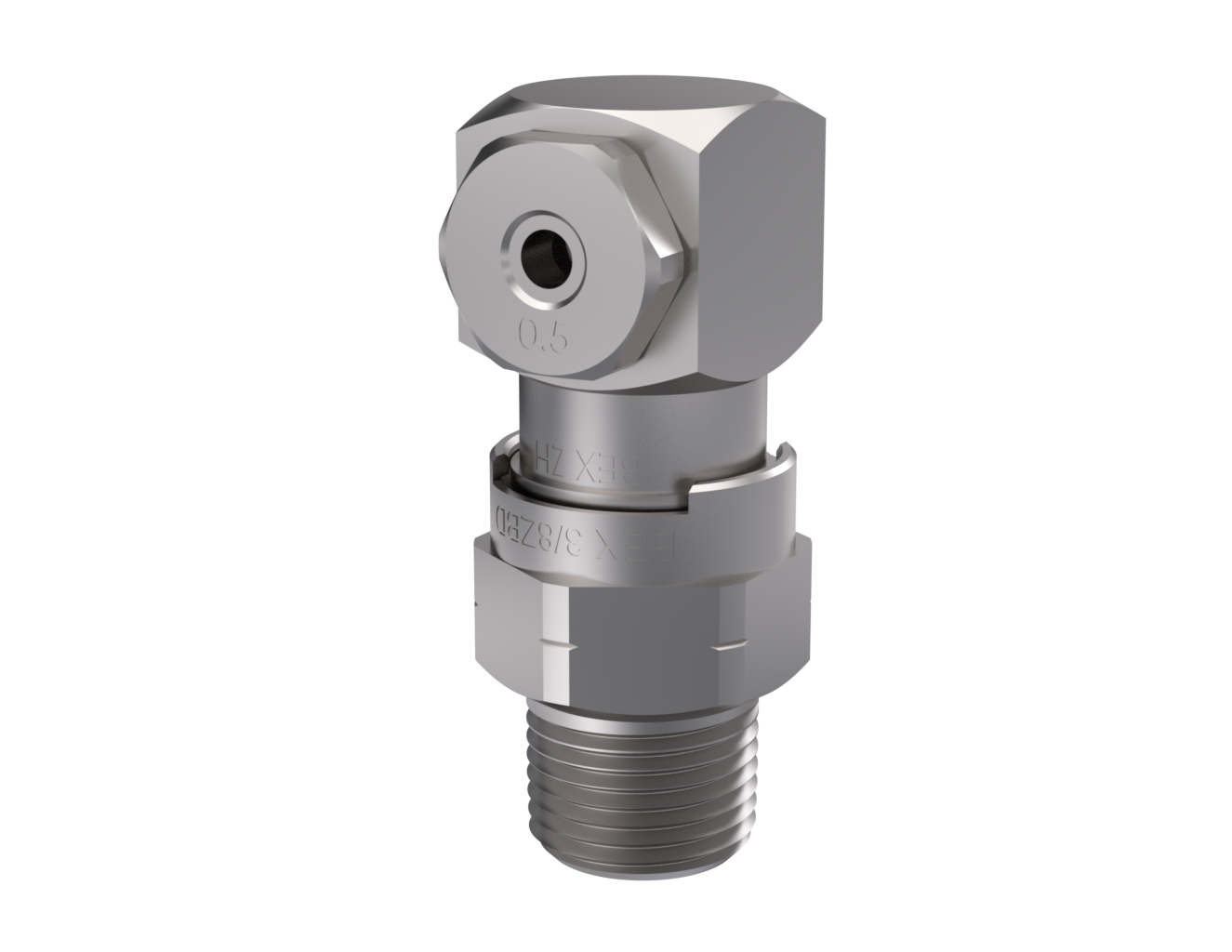
The BEX C Series hollow cone nozzles are the workhorse for grain handling dust suppression, producing the fine droplet spectrum (100–300 μm VMD at standard pressures) needed for effective airborne particle capture. For installations where tool-free nozzle changeout is desirable, the ZH Series quick-connect hollow cone nozzles allow rapid replacement without interrupting operations. For sub-10 μm respirable dust in confined spaces like elevator legs, the JPL Series air atomizing nozzles produce the ultra-fine mist needed to capture the finest particles — though they require a compressed air supply.
Feedlot dust is a persistent challenge for intensive beef, dairy, and hog operations. Cattle and vehicle traffic on unpaved lots generates enormous quantities of dust, particularly in dry conditions. Unlike grain handling dust, feedlot dust is not explosive, but it is a major source of PM10 and PM2.5 particulate — the size fractions most damaging to human health — and a significant source of odour and biological aerosol that affects communities near large operations.
The primary approach in feedlots is surface wetting — applying water to the pen surface before dust becomes airborne — rather than attempting to capture airborne particles after the fact. Waterers and spray systems apply water to pen floors and alleys, binding the surface and suppressing dust at its source. The challenge is balancing adequate wetting against excess moisture that creates mud and compounds manure management problems.
Why it matters: too little water and the lot keeps putting PM10 and odour into the neighbours' air, too much and the pen turns to mud and adds to the manure management problem — coverage has to be even to hit that balance.
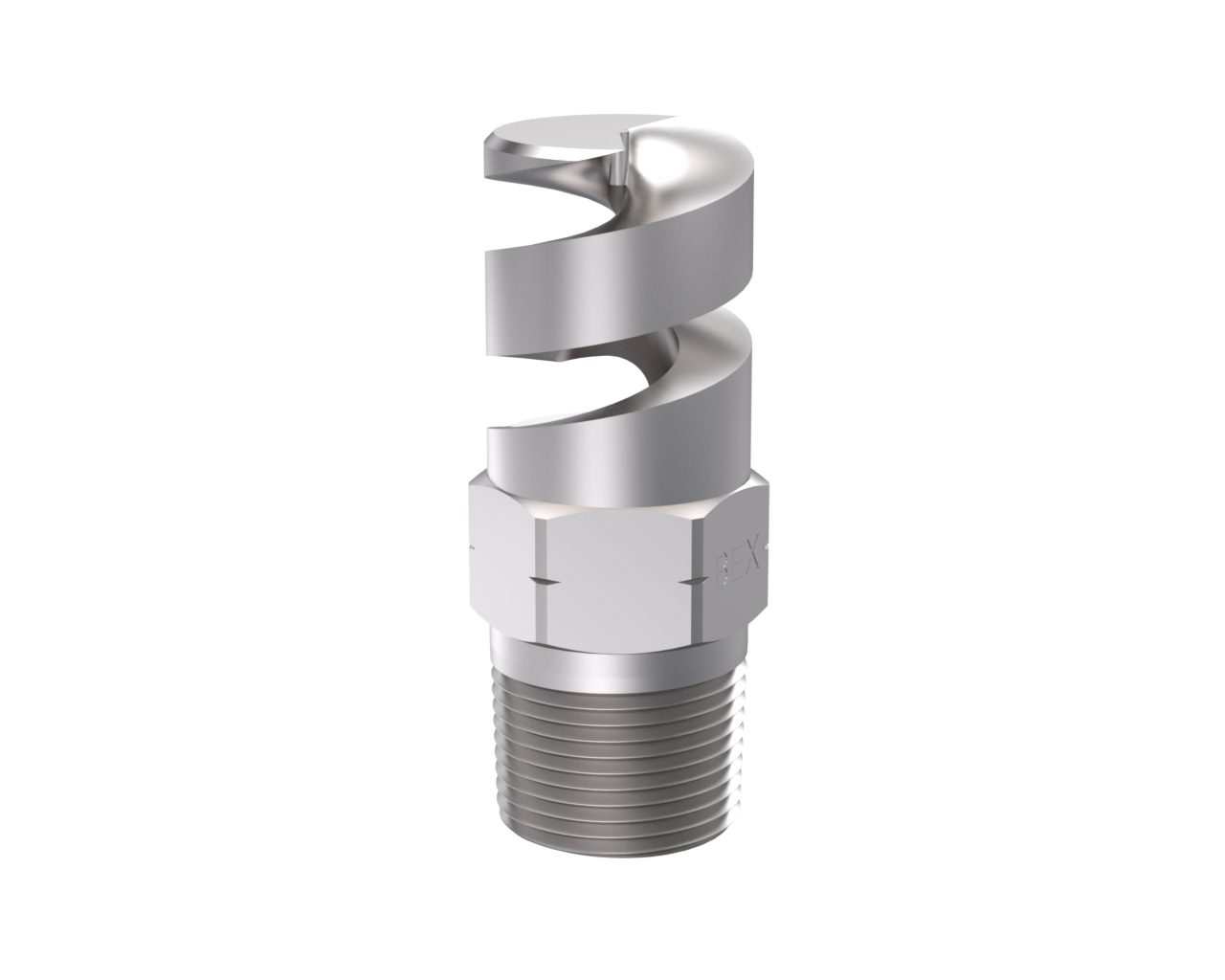
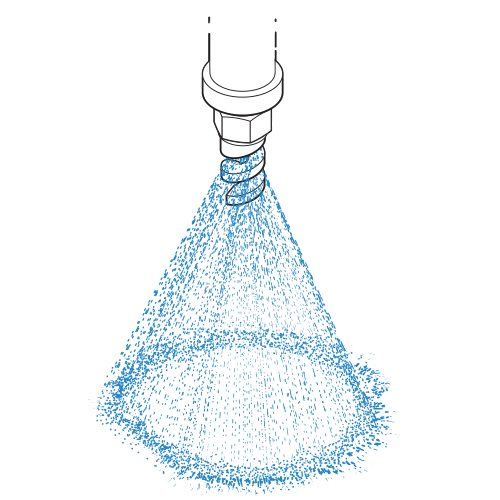
Wide-angle F Series flat fan nozzles (80°–110°) or S Series full cone nozzles mounted on fixed risers or portable spray bars are the standard choice for feedlot surface wetting. Their broad coverage patterns allow each nozzle to wet a large area of pen surface efficiently. For fine mist dust suppression above the pen surface where airborne dust must be intercepted, the H Series hollow cone nozzles provide the droplet size and coverage uniformity needed. The YH and YS Series spiral (Twister) nozzles are a valuable option in feedlot applications where the water supply contains suspended solids or organic matter — their open spiral design resists clogging without the need for strainers or frequent maintenance.
Humidity management in post-harvest environments is as critical to product quality as temperature control. Fresh produce — fruits, vegetables, and cut flowers — continues to respire after harvest, losing moisture to the surrounding atmosphere. If the relative humidity of the storage environment is too low, produce desiccates: it loses weight, becomes limp and unmarketable, and deteriorates more rapidly. Many fruits and vegetables require 90–98% RH in cold storage to maintain quality over extended storage periods. Even a small reduction in humidity below this range causes measurable weight loss and quality deterioration within days.
Achieving very high RH in cold storage is more challenging than it appears: the refrigeration equipment that removes heat also removes moisture, continuously driving down humidity. Humidification systems must continuously replace this moisture to maintain target RH levels. The nozzles must produce a fine mist that evaporates or disperses rapidly without wetting produce surfaces directly — direct wetting promotes mould and bacterial growth and can cause physical damage to delicate commodities.
Why it matters: a few points of humidity below target means produce is losing weight and marketability every day it sits in storage, while droplets too large to evaporate wet the produce or ice up the refrigeration coils.
The BEX JPL Series air atomizing nozzles are the premier choice for cold store humidification. Their ultra-fine droplet output (10–50 μm) evaporates rapidly, introducing water vapour into the cold air without creating droplets large enough to fall onto produce or create ice on refrigeration coils. The independent air and liquid controls allow precise adjustment of humidification rate to match the rate of moisture loss from the refrigeration system. For larger cold stores where compressed air supply is not available, the C Series hollow cone nozzles at very low flow rates provide an acceptable alternative, though the somewhat coarser droplet output requires careful nozzle placement to ensure evaporation occurs before droplets reach produce or equipment surfaces.
Grain and seed that has dried below its target moisture content during storage must be reconditioned — water is added uniformly to bring it back to the optimal moisture level for milling, malting, or further processing. This is a precision application: the correct amount of water must be applied uniformly across the grain mass, and the grain must be allowed to equilibrate (the water must migrate into the kernel from the surface) before further processing. Over-wetting causes spoilage; under-wetting is ineffective.
Why it matters: grain that's over-wetted in one spot can spoil, and grain that's under-wetted doesn't condition at all — uneven water addition gives you both problems in the same batch.
The BEX S Series full cone nozzles in small orifice sizes provide the uniform, metered water addition needed for grain conditioning. Their predictable flow rate at a given operating pressure allows precise water application when combined with calibrated pressure regulation and a flow meter. For fine mist conditioning where the smallest possible droplets are desired to maximize surface coverage per unit of water applied, the C and H Series hollow cone nozzles provide a fine spray that wets grain surfaces evenly without localised overwetting.
Beyond the specific applications above, there is a broad category of agricultural wetting tasks where the goal is simply to add a controlled amount of water to a material — to initiate composting, to prepare soil for seeding, to condition feed, or to suppress dust from stored materials. These applications share common requirements: uniform distribution, accurate flow rate control, and materials-compatibility with the wetting agent or liquid being applied.
Active composting requires moisture content in the range of 50–60% by weight for optimal microbial activity. In hot, dry conditions, compost windrows lose moisture rapidly and must be re-wetted to maintain this range. Irrigation booms or mobile spray systems make passes over the windrows, applying water uniformly across the full windrow cross-section. The spray must penetrate the outer surface of the windrow rather than running off, and must not create anaerobic conditions by over-wetting the core.
Why it matters: water that runs off the windrow surface never reaches the microbes doing the work, while over-wetting the core turns it anaerobic — slowing the compost and creating odour problems.
The BEX S Series full cone nozzles or F Series flat fan nozzles in medium-to-large flow rates are the appropriate choice for windrow wetting, providing the flow rates and spray patterns needed to wet large volumes of material efficiently. For applications involving liquid compost amendments or concentrated organic fertilizers, the YH and YS Series spiral (Twister) nozzles handle the viscous, particle-laden liquids without clogging — a common failure mode for conventional nozzles in this application.
Total Mixed Ration (TMR) for dairy cattle must be formulated to a target moisture content to ensure adequate intake and prevent sorting by animals. Dry rations are wetted with water at the mixer to achieve the target moisture level. The spray must be distributed throughout the feed mass as it is added, requiring a wide-angle pattern and precise flow rate control to achieve the target moisture uniformity in a single mixer load.
Why it matters: uneven moisture in the ration gives cows something to sort, so they pick out what they like and leave the rest — and the formulation the nutritionist balanced isn't what they actually eat.
The BEX S Series full cone nozzles provide the broad, uniform water distribution into TMR mixers that ensures even moisture throughout the feed mass. Their predictable flow rates at operating pressure allow the mixer operator to accurately dose water to the formulation target. For applications involving liquid feed additives — molasses, bypass fat emulsions, or liquid protein supplements — the YH Series nozzles (designed for viscous and particle-laden liquids with large free passage) handle these materials without clogging.
Agricultural spray environments present a range of material compatibility challenges that must be addressed in nozzle selection. Liquid fertilizers — particularly ammonium nitrate solutions (UAN), phosphoric acid blends, and potassium chloride solutions — are corrosive to brass and can attack some grades of stainless steel. Pesticide formulations may contain solvents that attack certain plastics. Livestock facility water supplies often contain high levels of minerals (calcium, magnesium) that cause scale buildup and can clog conventional nozzle orifices. BEX offers nozzles in a range of materials to match these conditions:
| Material | Best for |
|---|---|
| 316 Stainless Steel | The preferred choice for fertilizer spraying (including UAN and acidic fertilizer blends) and for livestock facility applications where manure-contaminated water or sanitizing chemicals are present. |
| PVDF (Polyvinylidene Fluoride) | Recommended for aggressive pesticide formulations and strongly acidic or alkaline liquids where stainless steel’s corrosion resistance is insufficient. |
| Polypropylene (F, FT, and ZF Series injection moulded) | An economical, chemically inert option for high-volume boom sprayer applications where nozzles are treated as consumable wear items and replaced frequently. |
| YS Series spiral design (any material) | The best choice for applications where scale, mineral deposits, or suspended solids make conventional nozzle orifices prone to clogging — their open spiral passage has no small orifices to block. |
Spray nozzles are foundational to modern agriculture — present at every stage from field to storage, serving applications as varied as applying life-saving crop protection chemistry, keeping livestock productive through summer heat, preventing grain elevator explosions, and maintaining the humidity that keeps fresh produce marketable. In each of these applications, selecting the right nozzle type, spray pattern, droplet size, flow rate, and material makes the difference between an effective, efficient system and one that wastes inputs, creates maintenance problems, or fails to achieve its purpose.
BEX Engineering manufactures a comprehensive range of spray nozzles and eductors designed to meet the demanding requirements of agricultural operations. Whether you need a wide-angle flat fan for boom fertilizer application, an ultra-fine air atomizing nozzle for greenhouse humidity control, a clog-resistant spiral nozzle for feedlot water supply systems, or a full cone nozzle for soaking dairy cows — BEX has the product and the expertise to help you specify the right solution.
For assistance selecting the right nozzle for your agricultural application, contact BEX Engineering today.